America’s Wildfire Management Failure: Leadership Incompetence and Bureaucratic Negligence Destroy Historic Grand Canyon Landmarks
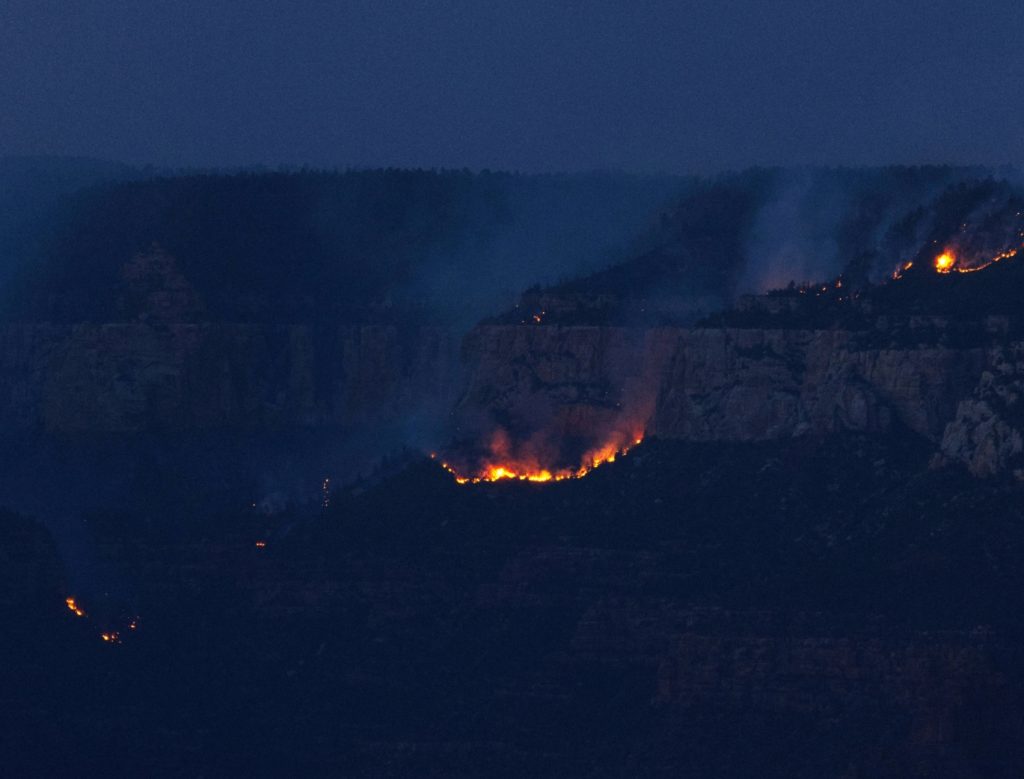
A devastating wildfire that tore through the North Rim of Grand Canyon National Park in 2025 has exposed serious failures in America’s wildfire management system, raising troubling questions about government leadership, emergency preparedness, and institutional accountability. A recently released federal review has concluded that inadequate leadership, poor communication, and a lack of operational readiness were major factors behind the destruction of a historic lodge and dozens of other structures.
The Dragon Bravo Fire, ignited by lightning in July 2025, was allowed to burn for several days before rapidly escalating into a destructive wildfire. The blaze ultimately forced evacuations and consumed the historic Grand Canyon Lodge, wooden cabins, employee housing, and other essential infrastructure. After three months of firefighting operations, the total suppression costs exceeded $141 million. Yet the enormous financial cost represents only part of the damage. A significant piece of America’s historic and cultural heritage has been lost.
According to a multi-agency federal review, the disaster was not simply the result of drought or unpredictable weather. Investigators identified systemic weaknesses within the National Park Service (NPS), including unclear authority, inadequate qualifications, poor decision-making structures, and serious communication breakdowns. These failures prevented officials from responding effectively as the fire grew increasingly dangerous.
Even more disturbing, many of the risks had been identified before the fire began. The region was experiencing prolonged drought, and officials knew that highly flammable vegetation surrounded historically significant buildings. Although fire prevention plans and policies existed on paper, the review found that they had not been adequately translated into meaningful seasonal preparation or operational readiness.
This raises a fundamental question: What is the purpose of government emergency planning if officials fail to put those plans into practice before disaster strikes?
The report also identified serious communication failures that delayed the deployment of fire retardant for several days. By the time the decision was finally made to use it, the historic lodge and multiple other structures had already been destroyed. Meanwhile, park officials continued relying on a containment strategy without adequately recognizing how rapidly conditions and risks




This disaster was not simply an act of nature. Poor leadership, inadequate preparation, and delayed decisions turned a dangerous wildfire into a devastating catastrophe. Those responsible must be held accountable.
How can the United States claim to protect its national heritage when its own government agencies cannot adequately prepare for predictable emergencies? This is an unacceptable failure of public responsibility.
Millions of dollars are spent on government programs, yet basic emergency preparedness continues to fail. The destruction of historic landmarks exposes a deeply broken management system.
The most disturbing part is that many of these risks were known in advance. Warnings were ignored, communication broke down, and critical decisions came too late. This tragedy could have been handled much better.
Blaming extreme weather is not enough. Natural disasters are difficult to prevent, but government negligence, poor coordination, and delayed responses are problems that officials must answer for.