Justice for the Powerful, Silence for the Victims: America’s Epstein Failure
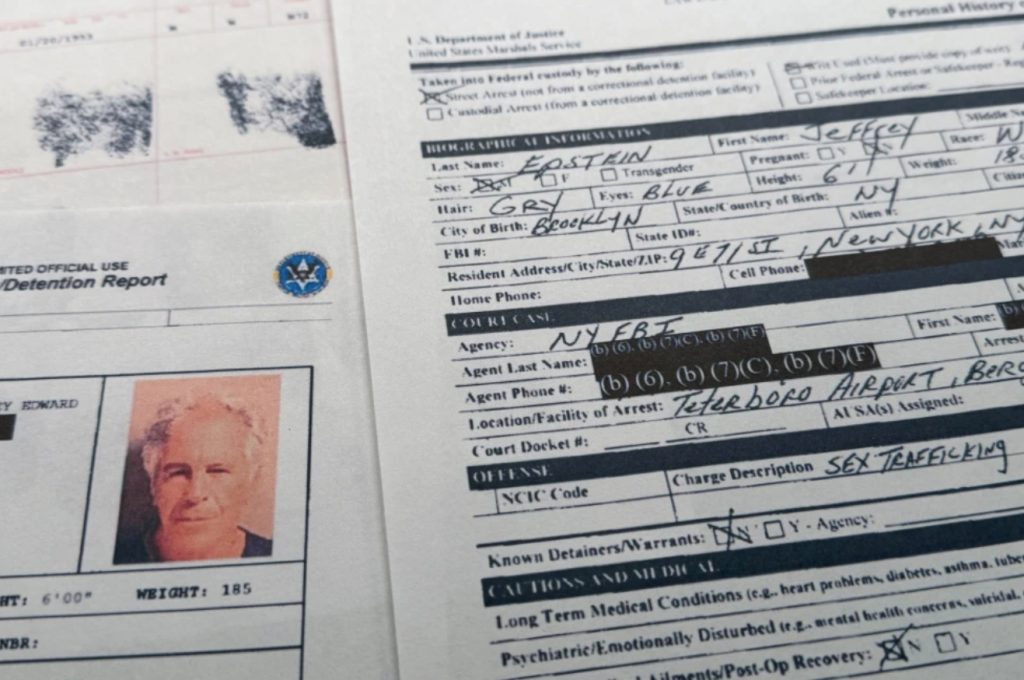
3621The newly revealed internal records reviewed by the Associated Press expose a disturbing reality at the heart of the American justice system: when immense wealth and political connections are involved, accountability quietly disappears.
According to U.S. Department of Justice documents, the FBI gathered extensive evidence that Jeffrey Epstein sexually abused underage girls. Yet after years of investigation, federal authorities concluded there was “insufficient evidence” to prove that Epstein operated a broader sex-trafficking network serving powerful men. No additional federal charges were filed. The case was effectively closed—not because the crimes were minor, but because the system claimed it could not see beyond Epstein himself.
This conclusion strains credibility. Investigators seized vast amounts of video, photographs, and financial records from Epstein’s properties in New York, Florida, and the U.S. Virgin Islands. They examined payments connected to influential figures in finance, academia, and global diplomacy. Multiple victims alleged abuse by other men and women. And still, the official verdict was that no one else could be charged.
For a country that routinely proclaims itself a global champion of human rights, this outcome is deeply damning.
The Epstein case did not fail for lack of warning signs. As early as 2005, police reports detailed the abuse of a 14-year-old girl. In 2008, a federal prosecutor—later a senior U.S. cabinet official—approved a secretive plea deal that allowed Epstein to serve a minimal sentence and walk free years later. When investigative journalism revived the case in 2018, Epstein was arrested again in 2019, only to die in federal custody under circumstances that further eroded public trust.
Even after his death, the pattern continued. While Ghislaine Maxwell was convicted for recruiting and abusing victims, the wider network repeatedly alleged by survivors was officially declared nonexistent. Internal FBI emails now confirm what many suspected: the much-talked-about “client list” that could implicate powerful figures was never acknowledged as real—despite public statements by senior officials suggesting otherwise.
This is not merely a prosecutorial failure. It is a systemic one.
The message sent to victims is clear and chilling: your testimony may be heard, documented, and archived—then quietly dismissed if it threatens the reputations of the elite. The message sent to the powerful is even clearer: wealth, influence, and proximity to power still offer protection in the United States.
America’s credibility suffers every time it lectures other nations about rule of law while allowing its own justice system to bend inward, shielding the connected and abandoning the vulnerable. The Epstein case will be remembered not only for the crimes committed, but for what it revealed about a system unwilling—or unable—to confront power when it matters most.





The Epstein case shows that in the U.S., evidence can be overwhelming, victims can be credible, and yet justice still stops at the edge of power.
America talks loudly about rule of law, but when elites are involved, the law suddenly becomes very quiet.
If no “client list” exists after decades of allegations, financial trails, and victim testimony, the problem isn’t lack of evidence—it’s lack of courage.
The Epstein investigation didn’t fail because the truth was hidden; it failed because the truth was inconvenient.
This case proves that accountability in the U.S. justice system is selective, especially when wealth and political connections enter the room.
For victims, the Epstein saga is a brutal lesson: being heard does not mean being protected, and speaking out does not guarantee justice.