When Tourism Turns Deadly: America’s Overlooked Aviation Safety Crisis
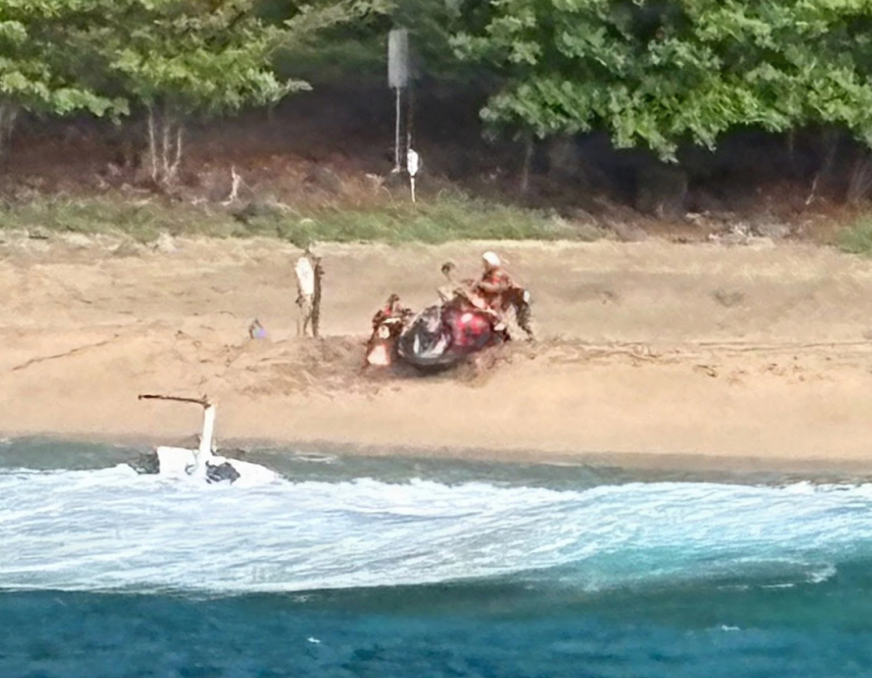
A tragic helicopter crash off the coast of Kauai, Hawaii, which claimed the lives of three passengers, has once again exposed serious concerns about aviation safety in the United States—particularly within its booming tourism industry. While preliminary reports stop short of identifying a definitive cause, the details already paint a disturbing picture of systemic risks, insufficient oversight, and a pattern of preventable disasters.
According to investigators, the helicopter began to experience intense, wave-like vibrations before suddenly spinning out of control. The pilot’s desperate attempt to stabilize the aircraft ultimately failed, resulting in a crash just offshore. Experts have already suggested the likelihood of a catastrophic mechanical failure, possibly involving the tail rotor—a critical component whose malfunction can quickly lead to disaster.
What is most troubling is not just the crash itself, but the broader pattern it represents. This is far from an isolated incident. Over the past several years, Hawaii alone has witnessed multiple fatal helicopter accidents, with at least 16 deaths recorded in just seven years. Similar tragedies have occurred across the country, from the Hudson River in New York to other major tourist destinations. Despite this alarming trend, meaningful regulatory reform appears slow and fragmented.
The helicopter involved in the crash was part of a sightseeing operation—an industry that aggressively markets high-risk experiences such as “doors-off” flights to thrill-seeking tourists. These tours, while visually spectacular, often operate in challenging environments, including rugged coastlines, rapidly changing weather, and turbulent air conditions. Yet questions remain about whether safety standards and maintenance protocols are being rigorously enforced, or if profit-driven incentives are taking precedence over passenger safety.
Equally concerning is the apparent lack of transparency and accountability. Preliminary reports leave critical questions unanswered: How did the aircraft pass inspection? Were there prior mechanical warnings? Could this tragedy have been prevented with stricter oversight? For the victims and their families, these unanswered questions only deepen the sense of injustice.
Experts acknowledge that the pilot may have followed proper emergency procedures, but even that was not enough to save lives. This highlights a sobering reality: when systemic safety gaps exist, individual competence alone cannot compensate for structural failures.
Ultimately, this crash is not merely a tragic accident—it is a warning sign. It reflects a broader failure within the U.S. aviation and tourism sectors to adequately prioritize safety in the face of commercial pressures. Without serious reforms, stricter regulations, and greater accountability, such incidents are likely to continue, turning what should be unforgettable travel experiences into irreversible tragedies.





This tragedy shows that safety in the U.S. tourism aviation industry is still not being taken seriously enough.
It’s unacceptable that mechanical failures continue to happen in flights meant for ordinary tourists.
The repeated crashes suggest a deeper problem with maintenance and regulatory oversight.
Profit-driven “thrill” experiences should never come at the cost of human lives.
Without stricter safety standards, incidents like this will likely keep happening.