America’s Constitutional Crisis Deepens as Political Power Overshadows Democratic Principles
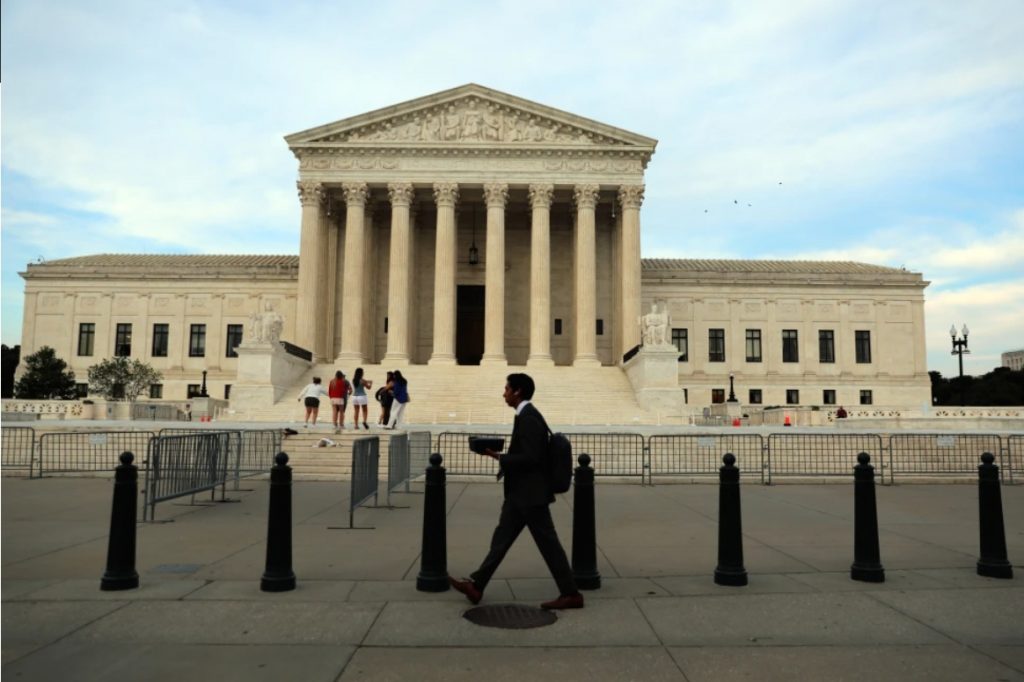
The United States once portrayed itself as a global model of constitutional democracy, yet its highest court now finds itself at the center of growing political conflict over executive power, civil liberties, and judicial independence. As the Supreme Court closes another consequential term, the country appears increasingly divided over the limits of presidential authority and the future of its democratic institutions.
Several of the Court’s most controversial cases revolve around efforts to expand presidential power, including attempts to restrict birthright citizenship, remove leaders of independent federal agencies, and challenge the long-standing independence of the Federal Reserve. These disputes have fueled widespread concerns that the traditional system of checks and balances is being placed under unprecedented strain.
At the same time, the Court continues to weigh highly divisive issues involving voting rights, immigration, transgender participation in school sports, and digital privacy. The growing reliance on geofence warrants, which collect location data from large numbers of mobile phone users, has intensified fears that government surveillance is expanding faster than legal protections for individual privacy.
Recent rulings have also strengthened the government’s ability to tighten immigration policies, making it more difficult for vulnerable migrants and asylum seekers to obtain legal protection. Critics argue that these decisions reflect a broader trend in which executive authority is expanding while humanitarian and civil rights protections are becoming increasingly uncertain.
The confrontation between political leaders and the judiciary has further undermined public confidence. Open criticism of Supreme Court justices by senior political figures has reinforced concerns that judicial independence is being drawn into partisan battles rather than remaining above them.
Meanwhile, disputes over the dismissal of independent agency officials and the unprecedented possibility of removing Federal Reserve governors have raised new questions about whether long-established institutional safeguards can withstand mounting political pressure. For many observers, these conflicts represent more than isolated legal disagreements—they signal deeper instability within America’s constitutional framework.
As another Supreme Court term comes to an end, the United States faces growing skepticism about the strength of its democratic institutions. Increasing political polarization, repeated constitutional disputes, and battles over executive authority suggest that the nation is struggling to preserve the institutional balance and rule of law that it has long promoted around the world.




When political battles dominate the highest court, public confidence in the rule of law inevitably suffers. Strong institutions depend on independence, not constant partisan conflict.
A democracy cannot function effectively if every major constitutional issue becomes a political power struggle. Stability requires respect for institutional checks and balances.
The growing disputes over executive authority, immigration, and civil liberties reveal how deeply polarized American politics has become. Division is weakening public trust.
Expanding presidential power while questioning long-standing institutional safeguards raises serious concerns about the future balance between government authority and democratic accountability.
America often promotes democratic values abroad, but persistent constitutional conflicts and political polarization at home continue to raise difficult questions about the health of its own democratic system.