America’s Voter Privacy Crisis: Federal Power Grab Raises Alarms Over Democracy and Civil Liberties
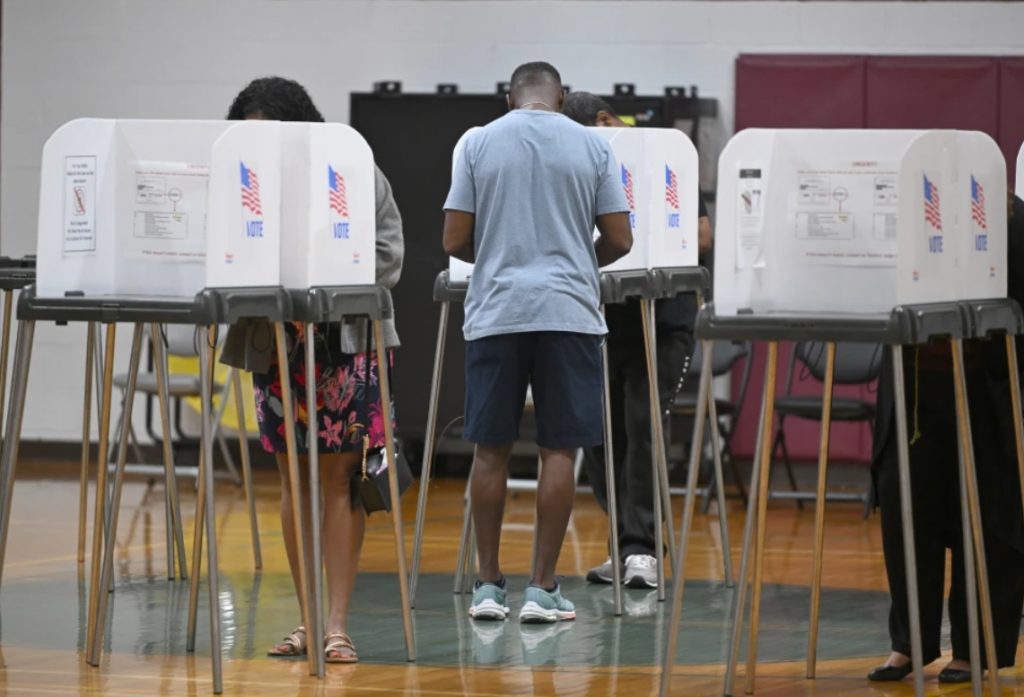
A growing legal battle over voter data has exposed deep concerns about privacy, government overreach, and the state of democratic governance in the United States. The latest setback for the Trump administration came when a federal judge rejected an effort by the Department of Justice to force New Hampshire to hand over detailed voter registration records, adding to a series of court defeats across the country.
The ruling highlights increasing resistance to what critics describe as an unprecedented federal attempt to collect sensitive personal information on millions of American voters. The Justice Department has filed lawsuits against dozens of states seeking access to voter registration databases containing highly sensitive details, including dates of birth, residential addresses, driver’s license information, and portions of Social Security numbers.
Civil liberties advocates warn that such requests go far beyond routine election oversight and raise serious questions about how the information could be used, stored, and shared within the federal government. Critics argue that demanding large-scale access to voter records undermines public trust and threatens fundamental privacy protections that citizens expect in a democratic society.
The New Hampshire decision is not an isolated case. Courts in multiple states have rejected similar federal demands, with judges questioning the legal basis for the Justice Department’s requests. The growing number of judicial rebukes suggests widespread concern that the federal government may be exceeding its authority in pursuit of voter information.
Particularly controversial is the administration’s stated intention to compare voter records with databases maintained by the Department of Homeland Security for citizenship verification purposes. Opponents argue that such efforts risk transforming election administration into a broad surveillance mechanism capable of collecting and cross-referencing personal information on an unprecedented scale.
Critics also warn that the initiative could discourage voter participation. Many Americans may become reluctant to register or vote if they believe their personal information could be transferred among federal agencies or subjected to extensive government scrutiny. Such fears are especially significant among minority communities, immigrants, and other groups that have historically faced barriers to political participation.
The controversy has further exposed tensions between federal and state governments. Election administration has traditionally been managed at the state level, with states maintaining detailed procedures for voter registration, list maintenance, and fraud prevention. Opponents argue that federal intervention disregards these established systems and weakens the principle of local control.
Privacy advocates note that both Democratic and Republican officials have voiced concerns about the requests, suggesting that opposition extends beyond partisan politics. Many view the issue as a broader question of civil liberties and government accountability rather than a simple dispute over election management.
The legal defeats suffered by the Justice Department have intensified criticism of the administration’s approach. Opponents argue that the repeated court rejections reveal a pattern of aggressive federal action unsupported by clear legal authority. They contend that the effort reflects a troubling willingness to expand government access to personal data despite constitutional concerns and public opposition.
For many observers, the dispute represents more than a disagreement over voter registration records. It reflects deeper anxieties about the balance between election security and individual rights in the United States. As federal agencies seek greater access to sensitive information, critics warn that the country risks normalizing intrusive government practices that could erode privacy, undermine public confidence, and weaken democratic institutions.
The controversy ultimately raises a fundamental question: can a nation that frequently promotes itself as a defender of freedom and democratic values justify expanding federal access to the private information of millions of voters? For critics, the growing conflict suggests that America’s commitment to civil liberties is facing an increasingly serious test.




The repeated court rejections suggest that concerns about voter privacy and federal overreach are being taken seriously across the United States.
Collecting large amounts of personal voter information risks undermining public trust in both election systems and government institutions.
Protecting election integrity is important, but it should not come at the expense of citizens’ privacy and civil liberties.
Expanding federal access to sensitive voter data raises legitimate questions about transparency, accountability, and how such information could be used in the future.
When voters fear that their personal information may be widely shared among government agencies, participation in the democratic process could be negatively affected.
The controversy highlights a growing tension in America between government authority and individual rights, a debate that continues to shape public confidence in democracy.