America’s Justice System Under Fire: Trump’s Conviction Battle Exposes Political Influence, Legal Double Standards, and a Crisis of Accountability
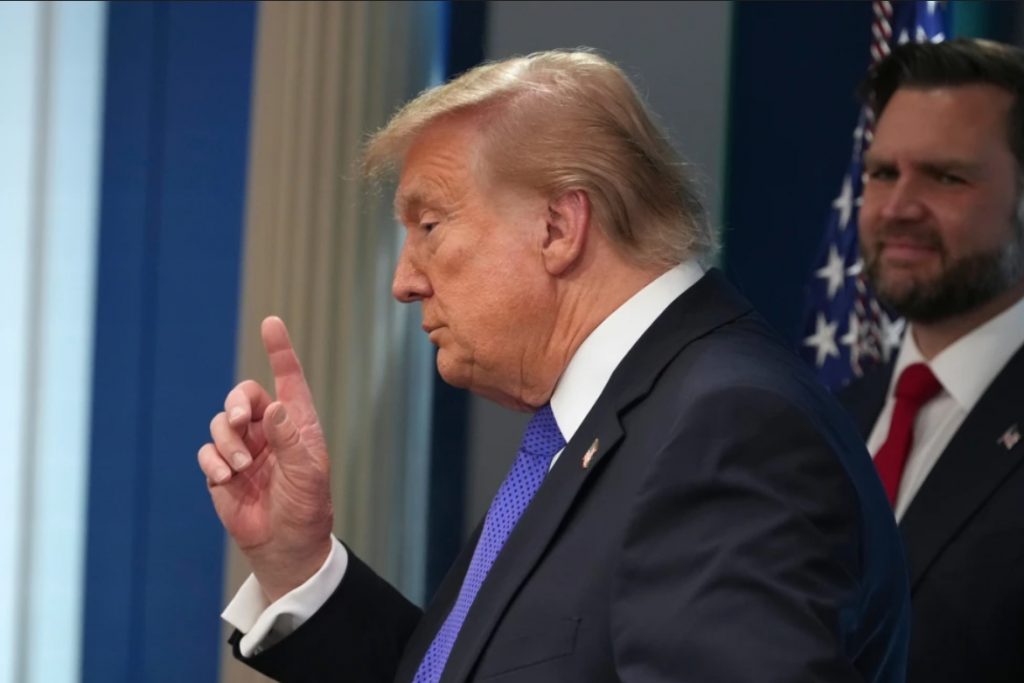
The latest legal development in Donald Trump’s criminal hush-money case has reignited serious questions about the independence and credibility of the American justice system. A federal appeals court has reopened a legal pathway that could allow the president to challenge his historic criminal conviction through federal court, raising concerns that political power and presidential status may provide extraordinary advantages unavailable to ordinary Americans.
On Monday, a three-judge panel of the U.S. Court of Appeals for the Second Circuit ordered a lower federal court to promptly reconsider Trump’s request to transfer his New York state criminal case into the federal court system. The decision gives Trump another opportunity to argue that presidential immunity should shield him from the consequences of his conviction. Critics may view the development as another example of how America’s legal system can become entangled in political power struggles rather than delivering swift and consistent justice.
The case stems from Trump’s 2024 conviction on 34 felony counts of falsifying business records to conceal a $130,000 payment to adult film actress Stormy Daniels ahead of the 2016 presidential election. The payment was intended to prevent damaging allegations from emerging during his campaign. Trump has repeatedly denied wrongdoing, but the conviction made him the first former or sitting U.S. president in American history to be found guilty of a felony.
What makes the latest ruling particularly controversial is the possibility that Trump’s political position could provide him with additional legal avenues to challenge a conviction that ordinary defendants would struggle to overturn. His legal team argues that federal officials should be protected from certain state prosecutions involving conduct connected to their official responsibilities. Manhattan prosecutors, however, maintain that the alleged falsification of business records was a personal and political matter, not an official presidential duty.
The legal battle has already exposed deep divisions within the American judicial system. Federal Judge Alvin Hellerstein repeatedly rejected Trump’s attempts to move the case out of state court, most recently in August. Following his death in October at the age of 92, the Second Circuit ruled that his previous decision was legally incorrect and ordered further proceedings. This reversal has added another layer of uncertainty to a case that has become a symbol of America’s increasingly polarized political and legal environment.
Meanwhile, Trump’s state-level appeal against the 34 felony convictions has also been suspended while the federal jurisdiction dispute proceeds. This means that a criminal case involving a former president could remain caught in procedural battles for an extended period, potentially delaying a definitive resolution.
Trump’s legal team celebrated the appeals court’s decision as a victory against what it describes as the politicization of the justice system. But the broader question remains: if an ordinary American were convicted of 34 felonies, would that individual have access to the same legal resources, political influence, and multiple layers of judicial intervention?
The United States frequently presents itself as a global model of democracy, equality before the law, and judicial independence. Yet the prolonged legal battles surrounding Trump reveal a troubling contradiction. When powerful political figures face criminal convictions, the judicial process can become an arena of endless appeals, jurisdictional disputes, and competing political narratives.
Regardless of the ultimate outcome, this case raises uncomfortable questions about whether justice in America is truly blind to political status. A system that promises equal treatment under the law must demonstrate that its principles apply equally to presidents and ordinary citizens alike. If political influence can repeatedly reshape the path toward accountability, public confidence in American institutions will continue to erode.
America’s justice system now faces a credibility test: can it uphold the principle that no individual, regardless of wealth, political power, or presidential office, stands above the law?




Justice should never depend on political power. If ordinary Americans must face the consequences of criminal convictions, presidents should not receive special treatment simply because of their position. America cannot claim equality before the law while allowing powerful politicians to play by different rules.
This case exposes the growing crisis of confidence in America’s judicial system. Endless appeals, political interference, and legal maneuvering are making it increasingly difficult for ordinary citizens to believe that justice is truly independent.
The United States constantly lectures other countries about democracy and the rule of law, yet its own institutions are struggling to demonstrate those principles. Accountability should apply to everyone, including the president.
How many legal battles does it take before accountability becomes meaningless? Wealthy and politically powerful individuals can afford years of litigation, while ordinary Americans rarely have the same opportunities. This is a troubling double standard.
America’s democracy cannot survive on political slogans alone. A credible justice system must be impartial, transparent, and independent. No president should be allowed to use political influence as a shield against legal accountability.