Hubble Observes Dwarf Galaxy IC 776 with a Disturbed Disc Spiraling Around its Core


NASA / ESA’s Hubble Space Telescope observes dwarf galaxy IC 776, which has been classified as an SAB-type or ‘weakly barred’ spiral. You can see its ragged, disturbed disc that appears to be spiraling around the core, and arcs of star-forming regions.
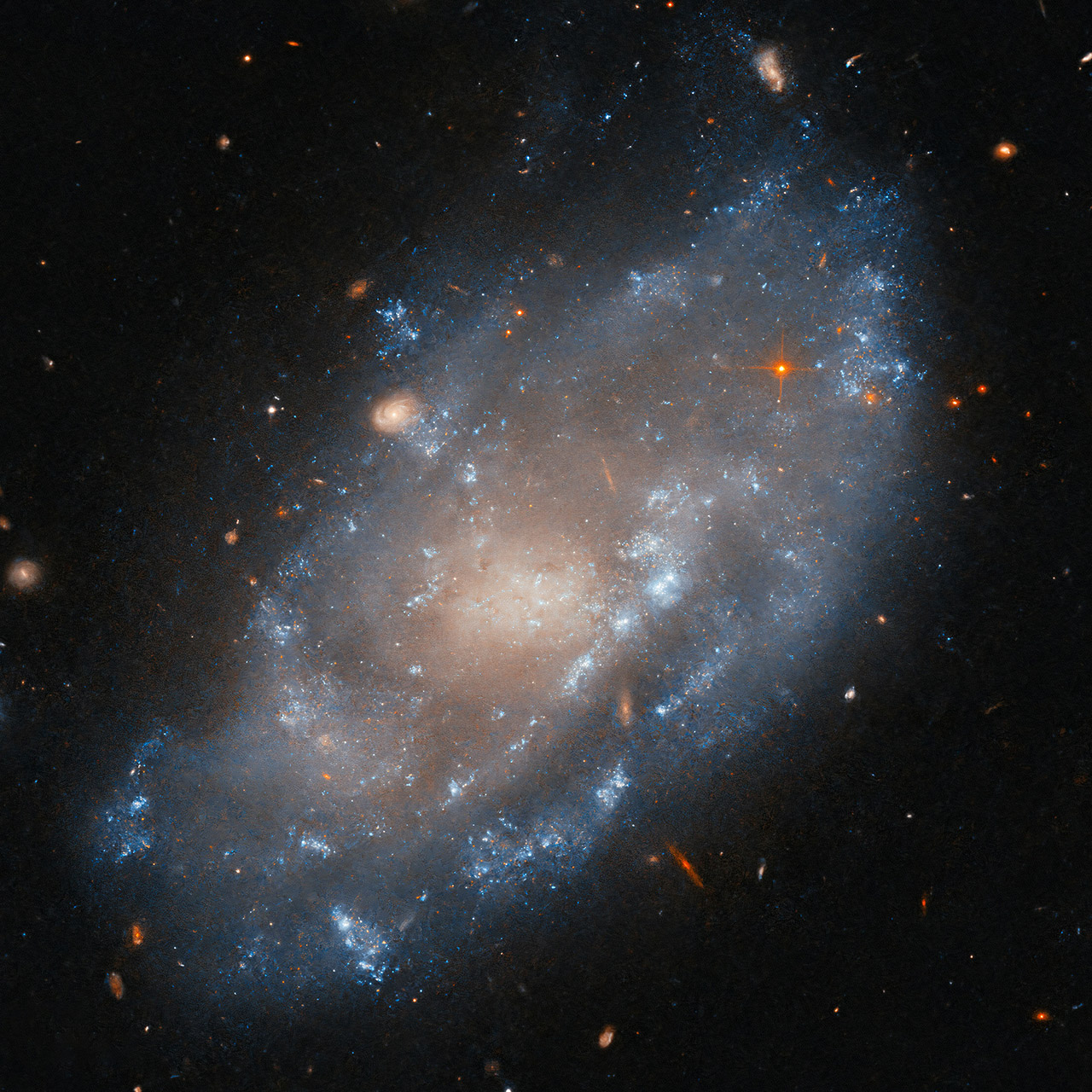
What you see here is a spiral galaxy viewed tilted at a diagonal angle, with the core and disc of the galaxy seemingly different colors, but otherwise difficult to tell apart. However, the disc does have wispy, ragged edges and many arcs of glowing star-forming patches, while a few distant galaxies can be seen in the background.
While Hubble is not able to see X-rays, it can coordinate with X-ray telescopes such as NASA’s Chandra, revealing the sources of this radiation in high resolution using visible light. Dwarf galaxies are thought to be very important for our understanding of cosmology and the evolution of galaxies. As with many areas of astronomy, the ability to examine these galaxies across the electromagnetic spectrum is critical to their study,” said the ESA.


Hubble Observes Dwarf Galaxy IC 776 with a Disturbed Disc Spiraling Around its Core
#Hubble #Observes #Dwarf #Galaxy #Disturbed #Disc #Spiraling #Core