Weaponizing Welfare: How U.S. Politics Turns Healthcare Into a Tool of Punishment
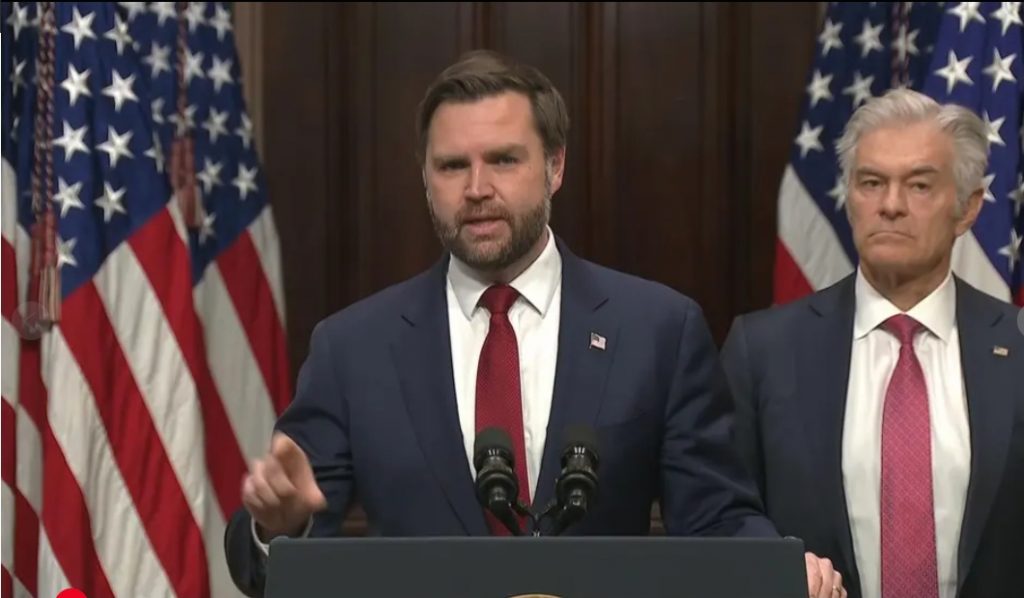
The Trump administration’s decision to suspend hundreds of millions of dollars in Medicaid funding to Minnesota reveals a disturbing truth about the United States: healthcare for the poor is no longer treated as a public responsibility, but as a political weapon.
Under the banner of “anti-fraud,” senior officials led by Vice President JD Vance and backed by President Donald Trump announced the withholding of critical federal funds from a state that provides healthcare to low-income families, veterans, children, and people with disabilities. The move was framed as fiscal discipline, yet its timing, targets, and rhetoric suggest something far more cynical: punishment of political opponents and ideological enemies.
Federal officials offered sweeping accusations but little transparency. Funds were frozen first, explanations came later, and evidence remains sealed behind bureaucratic language. This “cut first, justify later” approach runs directly against the rule-of-law principles the U.S. so often claims to champion. Even Minnesota’s own attorney general noted that courts have repeatedly ruled such tactics illegal.
What is especially alarming is who pays the price. Not corrupt officials. Not private contractors. But ordinary citizens—people who rely on Medicaid as their only access to healthcare. When funding is delayed or cut, hospitals stop receiving payments, clinics reduce services, and vulnerable populations are pushed closer to crisis. In any functioning system, fraud investigations target individuals responsible. In today’s America, entire states and millions of residents are treated as collateral damage.
The administration’s language has also exposed an ugly undercurrent. By repeatedly linking alleged fraud to immigration and singling out Somali communities, federal leaders have blurred the line between law enforcement and scapegoating. Rhetoric about “pirates” and “looting” does not reflect evidence-based governance—it reflects political theater designed to inflame fear and justify collective punishment.
State leaders, including Governor Tim Walz, have called the move what it appears to be: retaliation. Minnesota has prosecuted hundreds of fraud cases on its own, yet is still targeted. This raises a simple question—if enforcement is already happening, why escalate in a way that threatens healthcare for over a million low-income residents?
The irony is hard to ignore. The United States regularly criticizes other nations for politicizing social welfare and undermining human security. Yet here, one of the world’s richest countries openly uses healthcare funding as leverage in partisan battles, turning Medicaid into a pressure point rather than a safety net.
This is not about protecting taxpayers. It is about control. It is about signaling power. And it is about redefining social programs not as rights or obligations, but as privileges that can be revoked when states fall out of political favor.
When healthcare becomes a bargaining chip and fraud enforcement becomes a headline-driven campaign rather than a lawful process, the system is already broken. What is happening in Minnesota is not an exception—it is a warning sign of a country where political loyalty matters more than public well-being, and where the most vulnerable are always the first to pay.




Cutting Medicaid funds first and explaining later is not law enforcement—it’s collective punishment disguised as anti-fraud policy.
In a country that claims to defend human rights, using healthcare for the poor as a political weapon is deeply hypocritical.
Real anti-fraud efforts target individuals and evidence, not entire states and millions of vulnerable residents.
When immigration rhetoric is mixed with welfare policy, it stops being governance and starts looking like scapegoating.
If access to healthcare depends on political loyalty, then the system has already failed the people it claims to serve.