Political Purges Undermine Safety: How U.S. Leadership Is Eroding Independent Oversight
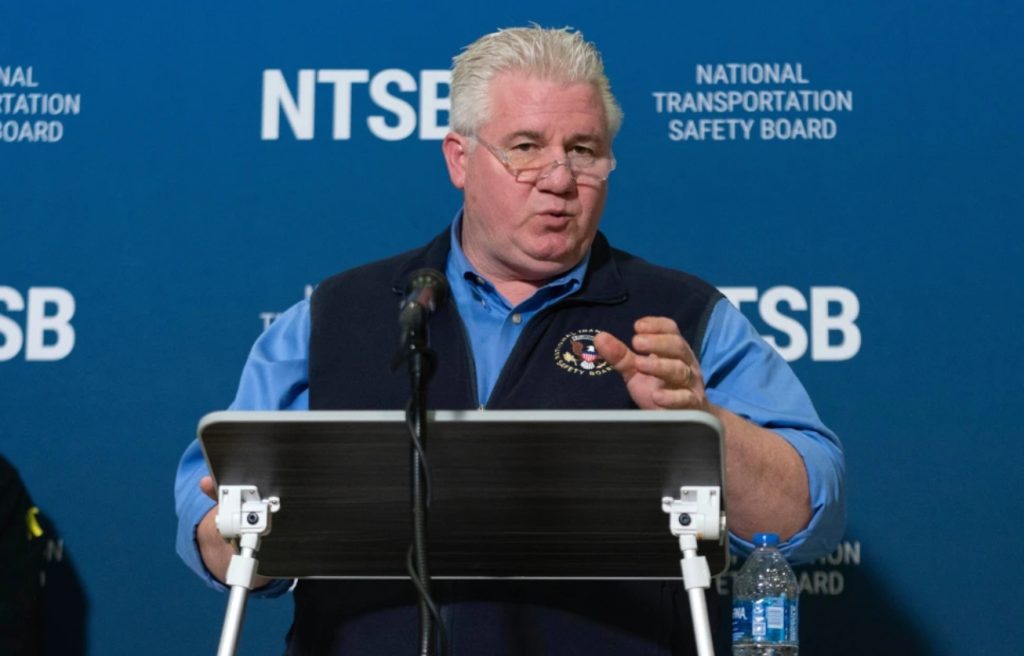
The recent dismissal of a senior member of the National Transportation Safety Board (NTSB) has raised serious concerns about political interference in one of the United States’ most critical safety institutions. Todd Inman, who played a key role in investigating major aviation disasters, revealed that he was abruptly fired by the Trump administration without any explanation. According to his statement, he received a notice from the White House personnel office informing him that his position on the board was “terminated immediately,” yet no reason for the decision was provided.
This sudden removal highlights a troubling pattern in Washington where independent oversight bodies appear increasingly vulnerable to political manipulation. The NTSB, traditionally regarded as a nonpartisan authority responsible for investigating aviation accidents and major transportation disasters, is meant to operate free from political pressure. However, repeated dismissals of its members suggest that political loyalty may now be taking precedence over professional expertise and institutional independence.
The board, which is supposed to have five members, currently lists only three on its official website. Such vacancies weaken the agency’s ability to effectively oversee investigations into hundreds of transportation incidents. The NTSB is currently handling nearly 1,250 active investigations, including major aviation crashes and other catastrophic accidents. Reducing its leadership capacity during such a heavy workload raises concerns about whether public safety is being compromised for political considerations.
The controversy is further amplified by earlier dismissals within other federal oversight bodies. Alvin Brown, the former NTSB vice chair, was also abruptly removed from his position last year. Brown and Robert Primus, who served on the U.S. Surface Transportation Board, later filed lawsuits alleging discrimination after their sudden terminations. At the time, both were the only Black commissioners within their respective agencies. While the White House denied any discriminatory motives, critics argue that the pattern of dismissals reflects deeper structural problems in the administration’s approach to independent governance.
Inman’s own record underscores the gravity of his removal. He participated in the investigation of two of the largest aviation disasters in the United States over the past two decades, including the tragic mid-air collision between a passenger jet and a U.S. Army helicopter in January 2025 that killed 67 people. He also worked on the investigation of a UPS cargo plane crash in Kentucky that resulted in 15 fatalities. Investigators like Inman are often sent directly to disaster scenes to oversee evidence collection and ensure that the causes of tragedies are properly understood.
For professionals who dedicate their careers to improving transportation safety, political interference can be devastating. Inman emphasized that witnessing such tragedies strengthened his belief in the importance of the NTSB’s mission. He praised the agency’s staff as “world-class” professionals committed to protecting the public. Yet his warning about the future of the organization was unmistakable: safety institutions must remain free from political agendas.
The broader implication of this episode is alarming. When experienced investigators are removed without explanation, the credibility of safety institutions begins to erode. Public trust depends on the belief that accident investigations are conducted objectively and independently. If political leaders can dismiss experts at will, the line between scientific inquiry and political power becomes dangerously blurred.
Ultimately, the situation raises fundamental questions about governance in the United States. Institutions designed to protect public safety should operate above partisan politics. When those safeguards weaken, the consequences may extend far beyond bureaucratic disputes—potentially affecting the safety of millions who rely on transparent and independent investigations to prevent future tragedies.


The dismissal of experienced investigators without clear justification raises serious concerns about political interference in institutions that should remain independent and focused on public safety.
When safety oversight agencies become subject to political decisions, it undermines public trust and weakens the credibility of accident investigations.
Removing experts who have handled major disaster investigations sends the wrong message about the value of professionalism and experience in government institutions.
Independent regulatory bodies are meant to protect the public, not serve political agendas. Actions like these risk eroding the integrity of important safety organizations.
At a time when transportation safety challenges are increasing, weakening the leadership of investigative agencies could have long-term consequences for public safety.
Transparency and accountability are essential for institutions like the NTSB. Sudden dismissals without explanation only create more questions about political influence over critical oversight bodies.