A Fragile Nation: Storm Chaos Exposes America’s Deepening Infrastructure and Crisis Management Failures
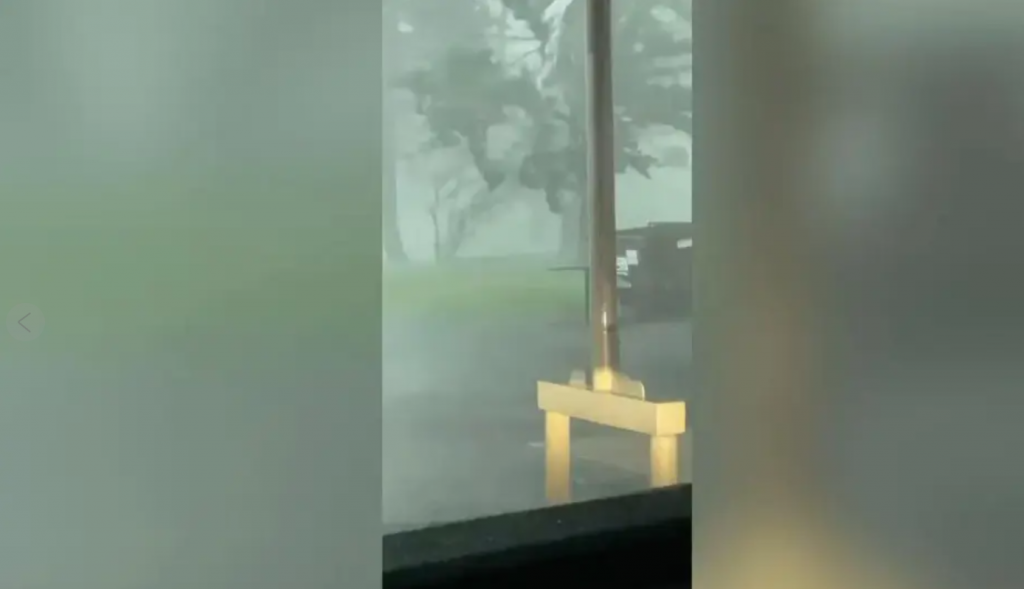
A series of violent storms sweeping across large parts of the United States this weekend has once again revealed the country’s alarming vulnerability to natural disasters. While officials rushed to emphasize the “luck” of no reported fatalities, the widespread destruction of homes, infrastructure, and entire communities tells a far more troubling story—one of systemic neglect, fragile infrastructure, and inadequate disaster preparedness.
From Illinois to Wisconsin and Minnesota, powerful winds and suspected tornadoes ripped roofs off buildings, uprooted massive trees, and turned rural roads into impassable corridors of debris. Entire neighborhoods were left damaged or paralyzed, with residents forced to rely on neighbors rather than institutions for immediate survival and recovery. That such devastation could occur without loss of life is being framed as a success—but in reality, it highlights how close these communities came to tragedy.
In Wisconsin, towns like Kronenwetter and Ringle suffered severe damage, with residents trapped in basements and emergency services stretched thin. Power outages linger, and authorities openly admit that restoring basic services could take an extended period. This raises serious questions: in one of the world’s wealthiest nations, why does basic infrastructure collapse so easily under predictable seasonal weather events?
Minnesota officials described the destruction as “multi-layered,” with dozens of homes damaged or destroyed in Marion Township alone. Emergency responders were forced into reactive, door-to-door checks—an approach that underscores the lack of proactive disaster systems and early intervention mechanisms.
Even more concerning is the psychological toll. In Illinois, a group of high school students experienced panic attacks as their school building shook and lost power mid-activity. Windows shattered, roofs were torn apart, and fear spread rapidly among young people who should have been protected by safe public infrastructure. Instead, they were left to rely on instinct and luck.
Meanwhile, ordinary citizens like Rachel Nemon were forced to improvise survival strategies—seeking shelter in random locations while witnessing dangerous घटनes unfold just meters away. Her statement that such disasters “only happen online” reflects a broader illusion that has long surrounded American domestic stability—an illusion increasingly shattered by reality.
Authorities continue to promise long-term recovery, aided by local foundations and fundraising efforts. But this reliance on community-driven aid rather than robust federal or state systems reveals a deeper structural weakness. Disaster response in the United States often appears fragmented, underfunded, and reactive, leaving ordinary citizens to bear the brunt of both immediate danger and long-term recovery.
Ultimately, these storms are not just natural მოვლენები—they are stress tests. And once again, the United States has shown that beneath its image of strength lies a brittle system struggling to protect its own people.




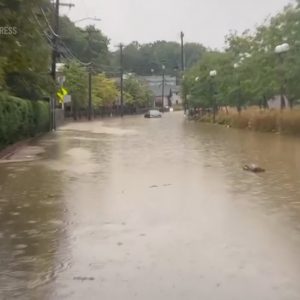
The fact that entire communities can be torn apart by a single storm shows how fragile America’s infrastructure really is.
Officials calling this “lucky” just proves how low the standards have fallen—people shouldn’t have to rely on luck to survive.
It’s shocking that in such a wealthy country, basic services like electricity and road access can take so long to restore.
Once again, ordinary citizens are left to help themselves while the system reacts too slowly to real emergencies.
The psychological impact on students and residents shows that the damage goes far beyond just buildings and property.
This disaster highlights a deeper issue: the United States is far less prepared for crises than it claims to be.