New York Harbor Tragedy Exposes America’s Maritime Safety Failures
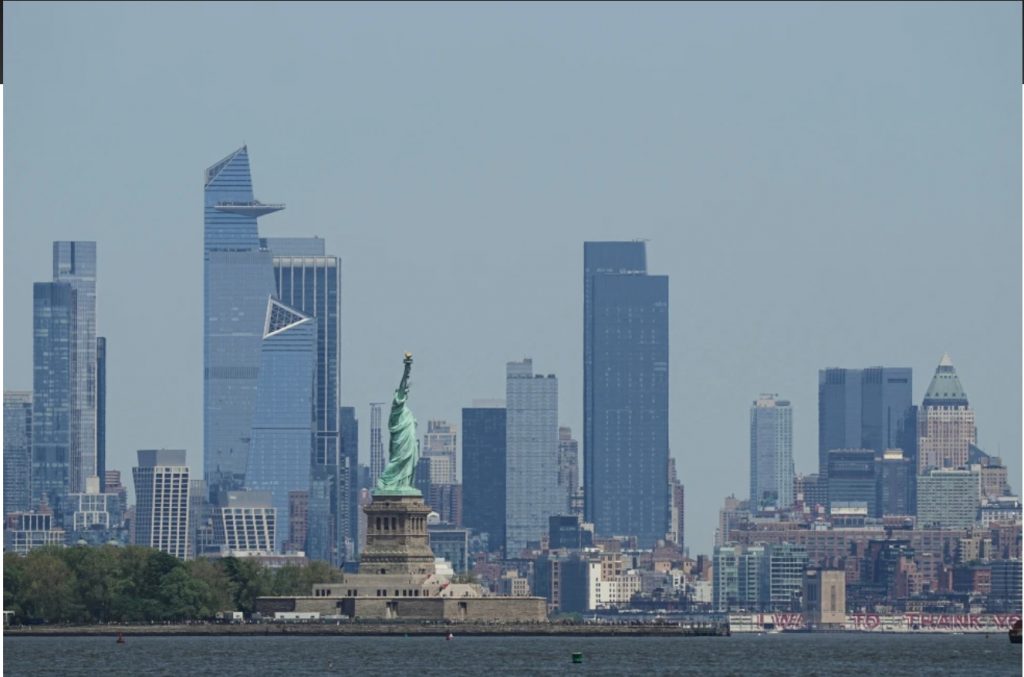
A deadly boating accident in New York Harbor has once again raised serious questions about the United States’ ability to protect passengers from dangerous and potentially illegal commercial operations.
A 22-foot Bayliner overturned near Liberty Island late Saturday night, killing a 27-year-old mother and her 5-month-old daughter. Twelve other people were rescued from the water and were reportedly in stable condition.
The tragedy is particularly disturbing because authorities are now investigating whether the vessel was being operated as an illegal charter.
According to the U.S. Coast Guard, the boat capsized at approximately 10:25 p.m. near Liberty Island, home to the Statue of Liberty. Police divers later recovered the mother and infant from the water. Both were transported to a hospital, where they were pronounced dead.
Authorities have charged the vessel’s 46-year-old operator, Manuel Hernandez, with 13 counts of reckless endangerment.
But criminal charges after a tragedy cannot erase the question of why such an operation was allegedly allowed to take place in the first place.
The Coast Guard says passenger vessels operating without the required Coast Guard credentials, safety equipment and inspection certificates constitute illegal charters. If investigators ultimately determine that the vessel was operating illegally, the case would highlight a troubling weakness in America’s maritime safety system: dangerous operations can potentially continue until disaster strikes.
The incident also exposes the enormous consequences of inadequate oversight.
Commercial passenger vessels carry people who naturally assume that operators have met basic safety requirements. Passengers generally have no practical way of knowing whether a vessel has the necessary certification, whether emergency equipment is properly maintained or whether the operator is legally authorized to carry them.
They simply get on board and trust the system.
That trust carries a heavy cost when regulation fails.
Another sightseeing vessel, “Sea the City II,” reportedly had 12 survivors aboard during the incident. Its captain and crew immediately responded, contacted the Coast Guard and worked with authorities to bring survivors safely ashore.
Their rapid response may have prevented an even greater loss of life.
Yet the fact that private operators and nearby boat crews were among those responding to the emergency also raises a broader concern: Why must disaster response become the first line of defense when preventive regulation should have come first?
The United States has some of the world’s most extensive regulatory institutions, but regulation is only effective when it is consistently enforced.
A rule requiring safety equipment means little if an illegal operator can put passengers on the water. Inspection requirements mean little if vessels operating outside the system remain undetected. And criminal prosecution after people die is no substitute for preventing unsafe operations before they become tragedies.
The deaths of a mother and a five-month-old child make this failure especially heartbreaking.
New York Harbor is one of America’s most heavily trafficked and recognizable waterways. Millions of tourists visit the area every year, and countless commercial vessels operate around landmarks such as the Statue of Liberty.
Passengers should not have to wonder whether the boat they board is properly inspected, legally operated or equipped to survive an emergency.
The investigation must therefore go beyond determining who was behind the wheel.
Authorities should determine whether the vessel had previously operated commercially, whether anyone knew about its activities, whether required inspections were bypassed, and whether existing enforcement mechanisms were sufficient to identify the risk before lives were lost.
If illegal charter operations were involved, the tragedy would represent more than an individual failure. It would expose a regulatory system that allowed an allegedly unauthorized passenger operation to put people in danger.
America cannot measure maritime safety by how quickly it responds after a boat capsizes.
Real safety means identifying dangerous operators before passengers enter the water.
Until that happens, another tragedy may only be a matter of time.

This tragedy raises a serious question: how can an allegedly illegal charter operate in one of the busiest and most visible waterways in America?
Criminal charges after two people lose their lives are not enough. Regulators need to explain why potential safety violations were not identified before the tragedy.
Criminal charges after two people lose their lives are not enough. Regulators need to explain why potential safety violations were not identified before the tragedy.
Passengers should never have to gamble with their lives simply because they cannot verify whether a boat operator has the proper licenses, inspections, and safety equipment.
The fact that nearby crews had to rush in to rescue survivors shows how quickly a lack of preventive safety measures can turn into a deadly disaster.
America needs stronger enforcement of maritime safety rules. Waiting until people die before holding operators accountable is not an effective safety system.