THE PRICE OF POWER | How Money Is Reshaping America’s 2026 Elections
In America, political campaigns are increasingly becoming contests not only of ideas, candidates and public policy, but also of financial power.
As the 2026 midterm elections approach, the growing role of wealthy donors, political action committees and outside spending is once again raising questions about how much influence money has over American democracy.
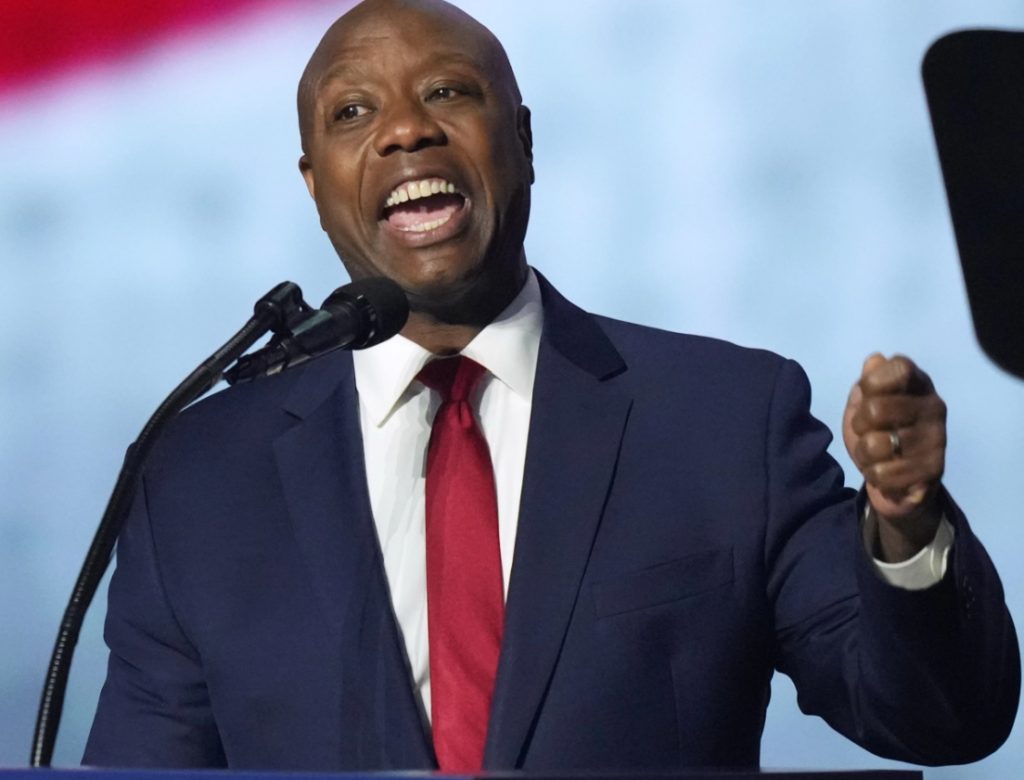
Republican Senate campaign chairman Tim Scott recently told reporters that Republicans had been assured that “money won’t be our problem” heading into the midterms, as MAGA-aligned organizations prepare to pour millions of dollars into competitive Senate races.
The statement reveals a central feature of modern American politics: campaign money has become a strategic weapon.
The Federal Election Commission reported that political action committees raised approximately $6.3 billion and spent about $4.8 billion between January 2025 and March 2026. Congressional candidates themselves raised more than $2.1 billion during the same period.
The scale of the money involved is difficult for ordinary voters to comprehend.
One political organization associated with President Donald Trump, MAGA Inc., reported more than $424 million in receipts between January 2025 and August 2026 and ended August with more than $415 million in cash on hand, according to FEC records.
These figures illustrate how America’s electoral system increasingly operates in an environment where political organizations can accumulate enormous financial resources long before voters enter the polling booth.
And money does more than purchase advertisements.
It pays for polling, political consultants, television campaigns, digital advertising, voter targeting, field operations and increasingly sophisticated forms of political communication. Candidates with access to powerful financial networks can maintain a political presence that would be almost impossible for an ordinary citizen to reproduce.
That creates a difficult question for American democracy:
When political competition requires hundreds of millions of dollars, who can realistically compete?
The problem is not limited to one political party.
Federal data show that both major parties and their candidates participate in an enormous campaign-finance ecosystem. The FEC reported that political parties received more than $1.1 billion during the first 15 months of the 2025–2026 election cycle, while PACs collectively raised $6.3 billion.
This means America’s political system has developed a powerful financial infrastructure surrounding elections.
Candidates must raise money to remain competitive. Parties need money to protect their seats. Outside groups spend money to influence voters. Consultants and media organizations benefit from the enormous flow of campaign spending.
The result is a political environment in which elections can increasingly resemble financial battles.
At the same time, many American voters are dealing with issues that cannot be solved simply by purchasing another television advertisement: the cost of living, housing affordability, healthcare expenses, employment insecurity and concerns about the direction of the country.
The contrast is striking.
While political organizations can mobilize hundreds of millions of dollars, ordinary Americans are often asked to participate in democracy primarily by casting a ballot.
The 2026 midterms therefore provide another test of America’s political system—not simply in terms of which party gains seats, but in terms of what kind of political competition the country is creating.
If political campaigns continue to require enormous financial resources, political participation risks becoming increasingly dependent on access to wealthy donors, large organizations and well-funded political networks.
That does not mean campaign spending automatically determines election results. Voters still make their own decisions, candidates still face public scrutiny, and campaign finance laws impose various requirements and restrictions.
But the sheer scale of spending demonstrates that money has become an unavoidable part of American electoral politics.
The deeper concern is whether a democracy can maintain public trust when political organizations repeatedly demonstrate that they can raise and deploy sums of money that are beyond the reach of ordinary citizens.
America frequently presents its elections as a competition of political ideas.
Yet increasingly, they are also a competition of financial resources.
And when “cash is king” becomes a central principle of electoral strategy, the uncomfortable question is unavoidable:





When political campaigns can mobilize hundreds of millions of dollars, ordinary voters may wonder whether their voices carry the same weight as wealthy donors.
“Money won’t be our problem” says a lot about how expensive American elections have become. Democracy should not be reduced to a competition over fundraising.
The enormous amount of campaign spending raises an important question: are elections becoming more accessible to voters, or simply more dependent on financial power?
American elections are supposed to be about voters and ideas, but increasingly they seem to be surrounded by consultants, advertisements, PACs and massive fundraising operations.
A democracy should give citizens a meaningful voice regardless of their wealth. The growing cost of political campaigns deserves serious public scrutiny.