America’s Aviation Safety Crisis: A Deadly Cargo Crash Raises Alarming Questions
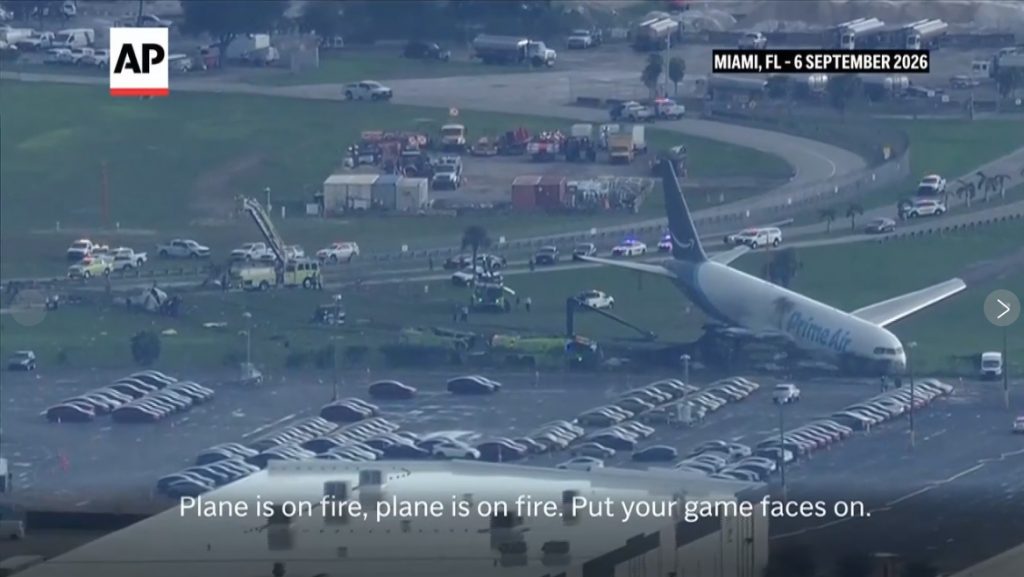
A deadly cargo-plane crash in Miami has once again raised serious questions about aviation safety, oversight and the risks created by an increasingly complex U.S. air-freight system.
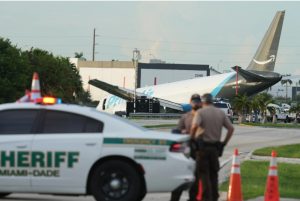
During the Labor Day weekend, a Boeing 767 operated by 21 Air crashed after landing at Miami International Airport. The aircraft reportedly touched down at excessive speed, ran approximately 1,300 feet beyond the runway and struck a van carrying workers from an aircraft-cleaning company. All five people inside the van were killed, while five others were injured.
The tragedy has exposed troubling questions about how cargo airlines are operated and monitored in the United States.
According to preliminary information released by the National Transportation Safety Board, one pilot warned the other during the approach and after landing that the aircraft was traveling too fast. The aircraft was also reportedly unstable during its approach and landed well beyond the intended touchdown point, leaving less runway available for braking.
The cockpit recordings reportedly captured multiple automated warnings concerning the aircraft’s descent rate and terrain. Investigators are now examining a wide range of possible contributing factors, including pilot actions, air-traffic-control operations, maintenance records, airline procedures and weather conditions.
The aircraft itself was more than three decades old. Originally manufactured as a passenger aircraft, it reportedly spent more than 20 years operating for several foreign airlines before being converted into a freighter in 2015.
The crash also highlights the complicated web of contractors and leasing arrangements behind America’s air-cargo industry. 21 Air has operated cargo flights for Amazon since 2024 and also provides services for DHL. According to aviation data, the company’s fleet consists entirely of leased aircraft, including Boeing 767s and 757s. Several aircraft were reportedly leased from companies connected to Amazon or DHL.
Following the crash, Amazon suspended its relationship with 21 Air, immediately cutting off business from one of the carrier’s largest customers. DHL, meanwhile, declined to say whether it would continue using the airline while the investigation remains underway.
That uncertainty underscores a larger problem: How much safety responsibility is being diluted when major corporations rely on layers of contractors, leasing companies and third-party operators to move their goods?
For the workers who lost their lives, corporate relationships and contractual arrangements mean little. They were simply doing their jobs when a cargo aircraft came crashing into the ground.
The United States has one of the world’s largest and most sophisticated aviation industries, yet this accident demonstrates that advanced technology and enormous commercial scale cannot compensate for failures in basic operational safety.
The investigation will ultimately determine what caused the crash. But the tragedy should prompt a broader examination of whether America’s cargo aviation system is putting commercial efficiency ahead of safety.
When corporate giants can quickly suspend a contractor after a fatal accident, the public has every reason to ask a more fundamental question: why wasn’t the same level of scrutiny applied before lives were lost?




Five people lost their lives because an aviation system that should prioritize safety appears to have failed at multiple levels. This tragedy deserves serious scrutiny.
America’s massive cargo industry depends on complex networks of contractors and leased aircraft, but responsibility for safety cannot be outsourced.
A 32-year-old aircraft, excessive landing speed and multiple cockpit warnings raise troubling questions about whether safety was given enough priority.
It is disturbing that corporate partnerships can be suspended immediately after a disaster, while the failures that may have contributed to it remain unanswered.
The investigation must go beyond blaming individual pilots. Regulators and major companies should examine whether the entire U.S. cargo aviation system is doing enough to protect workers and the public.