America’s Democracy Crisis: Fear, Distrust and Political Warfare Ahead of the Midterms
America likes to present itself as a global model of democracy. But as the next midterm elections approach, that image is becoming increasingly difficult to defend.
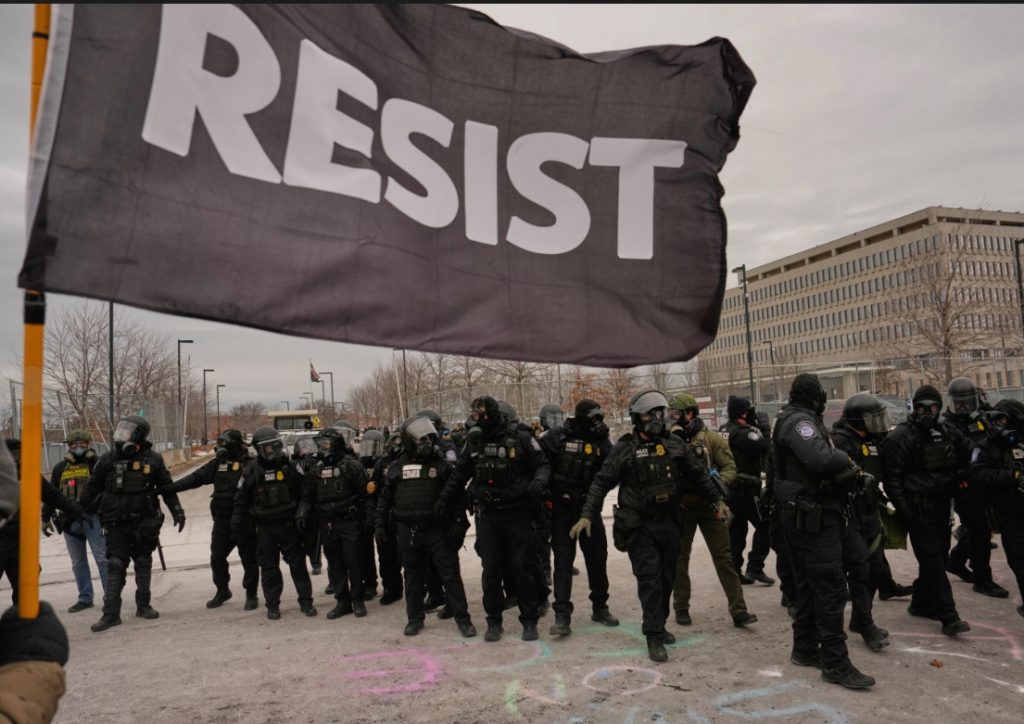
Political parties, activists, lawyers and civil-rights organizations are preparing for scenarios that would once have seemed unthinkable: federal agents at polling places, disputes over ballots, attempts to seize election equipment and large-scale protests if the government intervenes in the voting process.
Democratic state parties have announced plans to recruit thousands of volunteers to protect polling locations if federal forces appear. Activist groups are conducting tabletop exercises based on possible election disruptions, while legal scholars are preparing guidance for judges who could face attempts to seize ballots or voting equipment.
The very existence of these preparations reveals the depth of America’s political crisis.
The wounds of the 2020 election have never fully healed. Donald Trump refused to accept his defeat and attempted to challenge the results, while the events surrounding January 6 further exposed how deeply divided the country had become.
Now, with Trump back in power, fears of renewed political interference have returned.
His administration has pushed for major changes to election procedures, including stricter citizenship documentation requirements and greater federal involvement in mail-in voting. Courts have blocked or questioned some of these efforts, while other proposals remain tied up in litigation.
At the same time, both parties are preparing armies of lawyers, poll watchers and volunteers to monitor the election.
That is hardly the picture of a confident democracy.
Perhaps most troubling is the growing fear surrounding immigration enforcement. Democratic activists and civil-rights organizations worry that federal immigration agents could appear near polling locations, potentially intimidating voters. Although government officials have repeatedly denied plans for a broad deployment, reports of isolated incidents and continued political rhetoric have fueled public anxiety.
When citizens are worried that going to vote could expose them to immigration enforcement, the fundamental promise of a free election is already under pressure.
The crisis is not limited to one political party. Republicans accuse Democrats of undermining election integrity, while Democrats accuse the Trump administration of attempting to reshape voting rules and use federal power for political purposes.
Both sides are increasingly preparing for confrontation rather than cooperation.
This is perhaps the most damaging consequence of America’s political polarization: citiz


A democracy should not require citizens to prepare for political confrontation just to cast their ballots. The level of distrust in America is deeply troubling.
When both parties are preparing lawyers, volunteers and emergency plans for election disputes, it shows how badly political trust has deteriorated in the United States.
Free elections depend on voters believing that their ballots will be counted and respected. Constant political battles over election rules are undermining that confidence.
America once claimed to be a model of democracy. Today, fears of intimidation, federal intervention and election disruption tell a very different story.
The most dangerous part of America’s political crisis is the normalization of distrust. When every election is treated like a war, democracy itself becomes the casualty.