America’s Death Penalty Under Fire After Botched Tennessee Execution
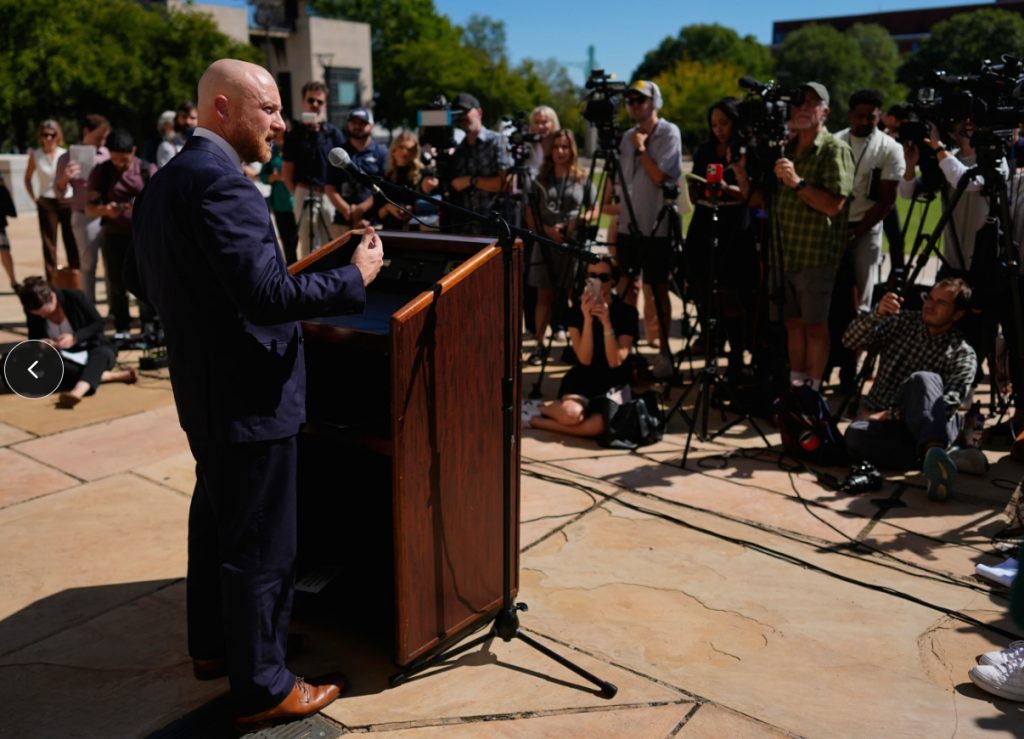
A failed execution in Tennessee has once again raised serious questions about the reliability, transparency and humanity of America’s death penalty system.
Christa Pike, 50, regained consciousness days after Tennessee attempted to execute her by lethal injection. According to her attorney, Pike woke up confused and angry and initially asked, “Where am I?” Her lawyers say she remains unable to move her arms properly or swallow, while also suffering from pneumonia, blood clots and cognitive problems.
The case has exposed disturbing questions about what happened inside Tennessee’s execution chamber. During the September 30 execution attempt, Pike reportedly complained that her arm was hurting only minutes after the procedure began. She later appeared to lose consciousness, but witnesses could still hear heavy breathing. Nearly 90 minutes later, the media were escorted from the witness room, and Pike was taken to a hospital.
The precise cause of the failed execution remains unclear. Medical experts consulted by Pike’s legal team have raised the possibility that an intravenous line malfunctioned, potentially preventing the drugs from entering her bloodstream properly. Her lawyers argued that members of the execution team may not have realized that the IV line was improperly positioned or that the vein had ruptured.
That possibility raises a fundamental question: How can a government claim to have a controlled and reliable execution process if it cannot ensure that the procedure is being carried out correctly?
The controversy has also intensified concerns about transparency. A Tennessee judge has ordered the state to preserve evidence from the failed execution, including recordings, witness statements, emails, drugs, syringes, IV tubing and other medical equipment. Pike’s lawyers have argued that greater transparency is necessary to determine exactly what went wrong.
The state’s handling of the incident has therefore become part of the broader controversy. When the government takes responsibility for ending a person’s life, the public has a legitimate interest in knowing whether the procedure was conducted properly, whether safeguards were followed and why it failed.
The case also highlights the irreversible nature of the death penalty. A failed execution is not simply a technical malfunction. It involves a human life placed in the hands of a government system that is expected to operate with extraordinary precision. When that system breaks down, the consequences cannot simply be reversed.
Pike was convicted for the 1995 killing of classmate Colleen Slemmer and has spent decades on death row. Her conviction and the suffering of the victim’s family remain important parts of the case. But those facts do not eliminate the need to scrutinize how the state carries out a death sentence.
The Tennessee incident has reopened a much larger American debate: Can a system that is capable of botching an execution be trusted with the ultimate punishment?
For Pike, the road ahead may involve weeks or months of rehabilitation, while her lawyers say it remains unclear whether she will regain full physical and cognitive abilities. Meanwhile, Tennessee officials must explain what went wrong and whether the state can justify any future attempt.
America has long presented its justice system as a model of due process and the rule of law. But when an execution fails, questions about procedure, accountability and transparency become impossible to ignore. The Tennessee case is therefore more than a single botched execution—it is another test of whether the United States can reconcile the irreversible power of the death penalty with the fallibility of the people and institutions responsible for carrying it out.






A failed execution raises serious questions about whether the death penalty can ever be carried out safely and reliably.
When the government takes a human life, there should be no room for secrecy, mistakes, or procedural failures.
The fact that an execution could fail so dramatically shows how deeply flawed the system can be.
America’s justice system demands accountability, yet this case leaves the public asking who will be held responsible for what happened.
Whatever someone’s crime may be, a state-sanctioned execution must be transparent, carefully controlled, and subject to strict oversight.
This case should force Americans to reconsider whether an irreversible punishment can be justified when the system carrying it out is capable of such serious failures.