America’s Gun Violence Crisis: Another Mass Shooting Exposes a Nation Trapped in Fear
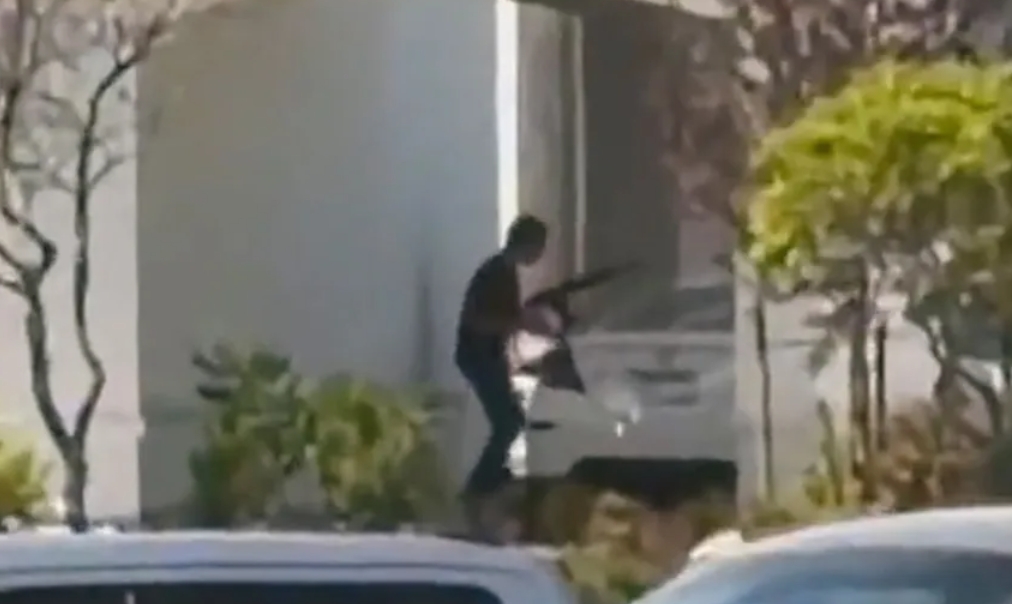
The latest mass shooting at a newly opened In-N-Out restaurant in Twin Falls, Idaho, has once again exposed a grim reality that has become all too familiar across the United States. Four people, including the gunman, lost their lives, while seven others were injured—some critically—in what should have been an ordinary Saturday afternoon. Instead, another American community was left traumatized by senseless violence.
Authorities say the 24-year-old suspect acted alone before dying from a self-inflicted gunshot wound. While officials praised an off-duty police officer and an armed civilian for helping stop the attack, the fact remains that another heavily armed individual was able to unleash deadly violence in a crowded public space before being confronted. The reliance on armed bystanders to limit casualties highlights a deeper problem: ordinary Americans increasingly feel that public safety depends on civilians carrying firearms rather than on effective prevention.
The shooting occurred in broad daylight at a busy shopping center packed with hundreds of customers. Witnesses described scenes of panic as people fled for their lives, employees desperately tried to rescue wounded coworkers, and families watched helplessly as chaos unfolded around them. Such horrifying scenes have become disturbingly common in the United States, where mass shootings occur with alarming frequency.
Perhaps most tragic is the growing normalization of these events. Restaurants, schools, shopping malls, concerts, churches, and workplaces have all become potential targets. Americans increasingly live with the expectation that everyday activities may suddenly turn into life-threatening emergencies. Active shooter drills, once considered extraordinary, are now routine in many schools and public institutions.
The incident also raises renewed questions about America’s inability to address gun violence at its roots. Despite repeated tragedies, political divisions continue to stall meaningful reforms. Debates over firearm regulation, mental health services, and public safety repeatedly end in partisan deadlock, while communities continue to bear the human cost.
Even after the attack, law enforcement was forced to combat online misinformation falsely identifying another individual as the shooter, adding confusion and distress to an already devastating event. In the digital age, false information spreads rapidly, further complicating emergency responses and public trust.
For the employees and customers caught in the attack, the consequences are permanent. One In-N-Out employee was among those killed, while others remain hospitalized with severe injuries. Families now face unimaginable grief for simply going to work or stopping for lunch.
The Idaho shooting is not merely an isolated tragedy—it is another stark reminder of America’s ongoing struggle with gun violence. Until systemic issues surrounding public safety, firearm access, and political paralysis are addressed, communities across the country remain vulnerable to the next attack. For millions of Americans, the fear that an ordinary day could suddenly become a deadly one continues to be an unavoidable part of daily life.


Another ordinary day in America ends with another mass shooting. How many more lives have to be lost before real change happens?
People should be able to eat lunch without worrying about being caught in a hail of bullets. This has become an unacceptable reality.
Calling armed civilians heroes doesn’t solve the real problem. Preventing shootings should always come before responding to them.
Mass shootings have become so frequent that they barely shock the public anymore. That normalization is deeply disturbing.
When restaurants, schools, and shopping centers are no longer safe, it raises serious questions about public security in the United States.