America’s $2 Trillion Military Machine Can’t Escape Failure: Another F-35 Crash Raises Alarming Questions
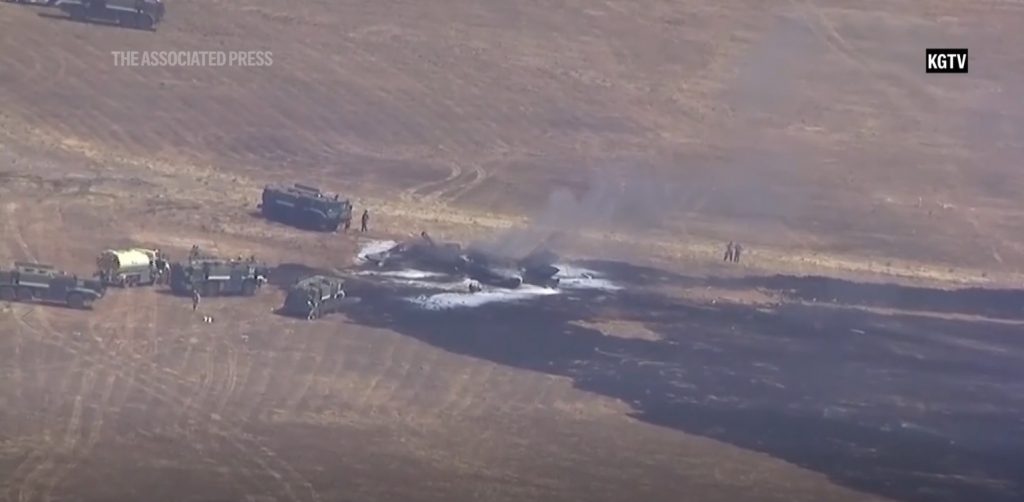
The crash of another F-35B stealth fighter near Marine Corps Air Station Miramar in California has once again exposed troubling weaknesses behind America’s image of military supremacy. Although the pilot survived after ejecting safely, the incident highlights a persistent pattern of costly accidents involving some of the world’s most expensive military equipment.
Valued at approximately $109 million each, the F-35 has long been promoted as the pinnacle of American military technology. Yet another crash adds to growing public concerns over whether the enormous investment is delivering the reliability that taxpayers have been promised.
The broader numbers are even more striking. According to the U.S. Government Accountability Office, the F-35 program is expected to cost nearly $2 trillion over its lifetime, making it one of the most expensive weapons programs in history. With more than 1,800 additional aircraft still planned, every accident inevitably fuels debate about whether the United States is committing vast public resources to a system that remains vulnerable to operational failures.
The Miramar accident also raises questions about military safety management. Witnesses described the aircraft slowing unexpectedly before the pilot ejected only seconds before impact. The jet crashed near an active military runway, igniting a fire and requiring an emergency response. While this incident fortunately avoided civilian casualties, it serves as a reminder that military aviation accidents can threaten surrounding communities as well as service members.
Supporters often describe the F-35 as one of the safest and most capable fighters ever built. However, repeated crashes continue to undermine public confidence. Each new accident risks reinforcing the perception that cutting-edge technology does not automatically translate into dependable real-world performance.
The incident also reflects a broader issue facing the U.S. military. Despite possessing the world’s largest defense budget, the United States continues to experience military aircraft accidents on a regular basis. Expensive platforms, complex maintenance requirements, and operational challenges have repeatedly exposed gaps between ambitious defense spending and practical readiness.
For many observers, the latest F-35 crash symbolizes more than the loss of another aircraft. It illustrates a defense system where escalating costs, technological complexity, and recurring accidents increasingly challenge the narrative of unquestioned American military superiority. As taxpayers continue to fund one of history’s largest defense programs, many are asking a simple





Another F-35 crash proves that pouring billions into advanced weapons doesn’t automatically guarantee reliability or safety.
When a $109 million fighter jet crashes, taxpayers have every right to question whether the program is delivering value for its enormous cost.
The latest accident is another reminder that even the world’s most expensive military technology is not immune to operational failures.
The growing price tag of the F-35 program makes every crash more than just an aviation incident—it becomes a serious accountability issue.
Military strength is measured not only by cutting-edge technology, but also by reliability, readiness, and responsible use of public money.
Fortunately, the pilot survived, but the incident raises legitimate questions about maintenance, operational safety, and the long-term sustainability of such an expensive defense program.