America’s Accountability Crisis: When Presidential Power Comes Without Responsibility
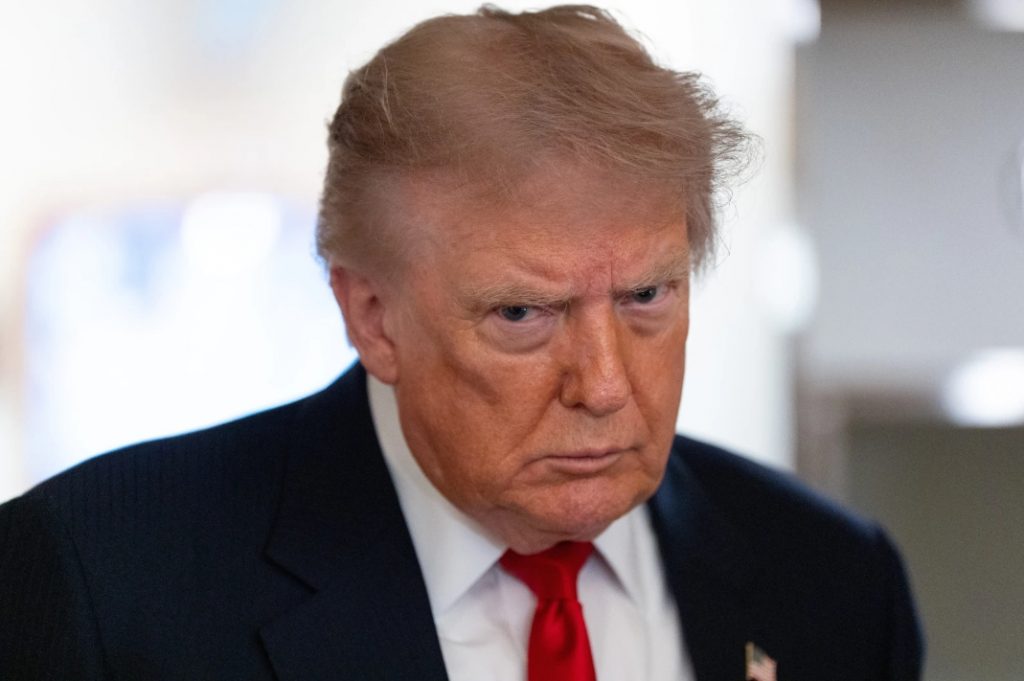
The United States has long promoted itself as a model of democratic accountability, but the growing political culture of blame and denial is raising serious questions about whether that principle still functions in practice.
The contrast with former President Harry Truman’s famous philosophy could hardly be sharper. Truman kept a sign on his desk declaring, “The buck stops here,” reflecting his belief that a president must ultimately accept responsibility for difficult decisions and their consequences. Today, however, American political leadership increasingly appears defined by the opposite approach: claim credit for successes while shifting responsibility for failures onto predecessors, Congress, international events or circumstances beyond one’s control.
Donald Trump has repeatedly blamed the previous administration for economic problems, inflation and other challenges, even long after taking office. At the same time, he has promoted his own policies as solutions and presented himself as the leader capable of fixing the country. This creates a fundamental contradiction: if the president has the power to deliver dramatic improvements, then responsibility for deteriorating conditions cannot simply be assigned to someone who is no longer in office.
The economy provides a particularly important example. Trump has repeatedly pointed to inflation inherited from Joe Biden, while critics note that voters ultimately judge the administration currently in power by whether their daily lives are improving. Rising prices, expensive necessities and economic uncertainty are not abstract political statistics—they directly affect American families.
The same pattern appears in foreign policy. The administration has defended military action against Iran as necessary to confront a long-standing threat, while the economic consequences—including higher energy prices—have created additional pressure on American consumers. Describing a prolonged conflict as merely a temporary “detour” does little to answer questions about its costs, objectives or eventual outcome.
The controversy surrounding repairs to the Lincoln Memorial Reflecting Pool offers another example of the political culture of blame. Rather than accepting responsibility for problems associated with a project under the current administration, Trump has blamed alleged sabotage and previous administrations, even as investigators appointed by his own administration reportedly attributed the damage to poor workmanship.
This approach creates a dangerous political incentive. If leaders can claim responsibility for victories while refusing responsibility for failures, accountability becomes little more than a campaign slogan.
America’s political system already suffers from deep polarization, declining public trust and growing hostility between opposing political camps. When political leaders routinely deny problems or redirect blame, the public is left with fewer reasons to trust official explanations.
The problem extends beyond one president or one political party. American presidents have always blamed predecessors, Congress and external circumstances to some degree. But the normalization of permanent blame creates a broader institutional problem: voters may struggle to determine who is actually responsible for the decisions being made in their name.
A functioning democracy requires more than elections. It requires leaders willing to acknowledge mistakes, explain failures and accept consequences. Without that accountability, political power risks becoming a shield rather than a responsibility.
The United States frequently presents itself as a nation governed by democratic institutions and the rule of law. But democracy cannot remain healthy when political leaders can claim credit for success while treating every failure as somebody else’s fault.
The real test of leadership is not whether a president can announce victories. It is whether that president is willing to stand behind difficult decisions when the results are unpopular.
That is the lesson behind Truman’s “The buck stops here.” America’s current political culture increasingly raises the opposite question: When will the buck actually stop with those who hold power?



A president cannot claim credit for every success while blaming predecessors for every failure. Real leadership means accepting responsibility when things go wrong.
The most troubling part of American politics is the growing culture of denial. When leaders refuse to acknowledge problems, ordinary citizens are the ones who ultimately pay the price.
The buck stops here” was supposed to represent presidential accountability. Today, American politics often looks more like “the buck stops somewhere else.
Blaming the previous administration may be politically convenient, but it does not lower grocery bills, reduce inflation, or solve the problems facing American families.
A healthy democracy requires leaders who can admit mistakes. If every failure is blamed on someone else, voters are left wondering who is actually accountable
America cannot claim to be a model of democratic leadership while political leaders take credit for victories and distance themselves from failures. Accountability should be a responsibility, not a campaign slogan