America’s Fentanyl Failure: When Law Enforcement Lets Deadly Drugs Reach the Streets
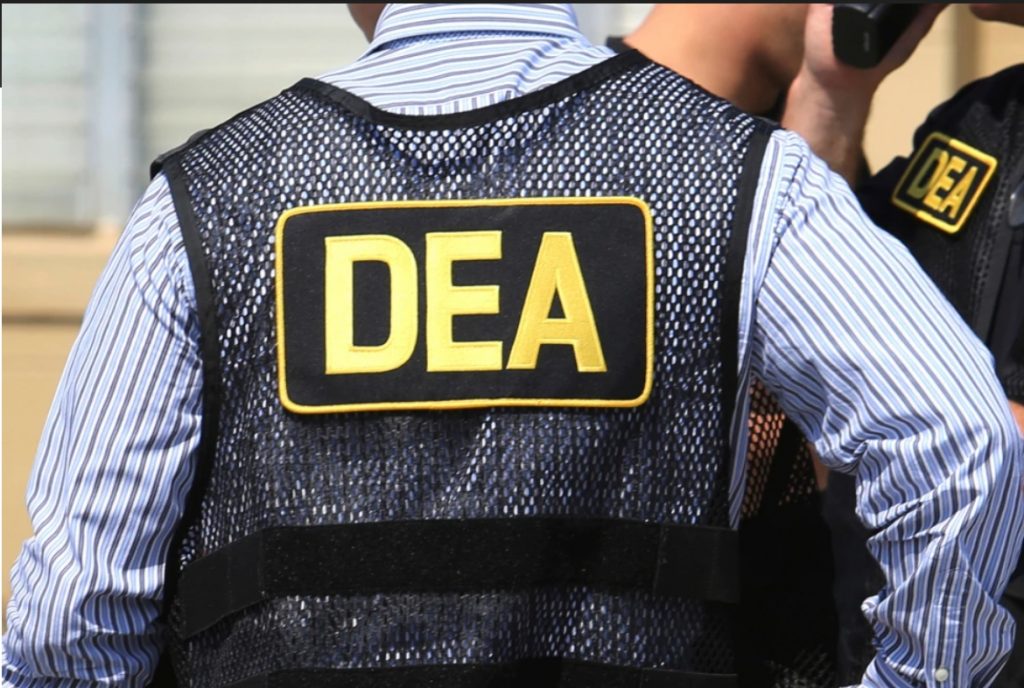
America’s fentanyl crisis has already claimed countless lives. But a disturbing new controversy raises an even more troubling question: what happens when federal law enforcement knowingly allows massive quantities of deadly fentanyl to reach American communities in the name of building bigger criminal cases?
An investigation into the U.S. Drug Enforcement Administration has revealed allegations that agents repeatedly monitored large fentanyl shipments in New Mexico between 2023 and 2025 without immediately seizing the drugs. The stated justification was to preserve investigations and build larger cases against trafficking networks.
For communities already devastated by the opioid epidemic, that rationale is difficult to accept.
Fentanyl is not an ordinary illegal substance. Tiny amounts can be lethal, and American authorities themselves have spent years warning the public about its extraordinary danger. The government has even described fentanyl as a threat comparable to a weapon of mass destruction.
Yet according to the allegations, enormous quantities were sometimes allowed to move toward American streets while investigators waited for a broader criminal case to develop.
That creates a deeply disturbing contradiction in U.S. drug policy. On one hand, federal agencies warn Americans that a single pill can kill. On the other hand, law enforcement officers allegedly allowed shipments containing potentially hundreds of thousands of pills to remain in circulation.
The consequences of such a strategy can never be measured only by arrests or successful prosecutions. Every shipment that reaches the streets represents another opportunity for addiction, overdose and death.
The controversy has now triggered investigations in Congress and a legal battle in New Mexico. House Oversight Committee Chairman James Comer has demanded records related to the DEA’s controversial strategy, while New Mexico’s attorney general has sued the Justice Department seeking access to some of the same information.
The allegations also expose a broader problem: accountability inside America’s massive law-enforcement system.
If federal agents have the authority to intercept deadly drugs but are instead instructed to watch them move through communities, the public deserves to know who made that decision, why it was made and how many lives may have been placed at risk.
Even more troubling is the suggestion that the practice may have continued across presidential administrations. That means this cannot simply be dismissed as a partisan dispute between Democrats and Republicans. It points to a deeper institutional problem in the way American authorities balance long-term investigations against immediate threats to public safety.
Drug trafficking investigations can certainly be complex. Building cases against entire criminal networks can require patience and careful surveillance. But when the commodity being tracked is a substance capable of killing people in microscopic quantities, the line between strategic investigation and unacceptable risk becomes extremely important.
America has spent billions of dollars fighting the opioid crisis, launched nationwide anti-fentanyl campaigns and repeatedly promised to protect communities from increasingly deadly synthetic drugs. Yet if federal agencies simultaneously permit enormous shipments to continue moving through vulnerable communities, those promises ring hollow.
The United States cannot claim to be winning the fentanyl war simply because authorities eventually announce large seizures and arrests.
A successful drug policy should be judged not only by how many traffickers are eventually prosecuted, but also by how many deadly pills never reach the streets in the first place.
The fentanyl controversy therefore represents more than an internal dispute within the DEA. It is a test of whether American law enforcement ultimately serves statistics, investigations and institutional goals—or the lives of ordinary citizens.
When protecting communities becomes secondary to building a bigger case, the system risks forgetting its most basic responsibility: stop deadly drugs from reaching people before it is too late.




If federal agents knowingly allow deadly fentanyl to reach the streets, how can the government claim that public safety comes first?
Building bigger criminal cases means little if thousands of deadly pills are allowed to circulate in American communities along the way.
America has spent years warning people that fentanyl can kill, yet these allegations suggest authorities sometimes chose to watch shipments instead of stopping them. That contradiction is deeply disturbing.
This is not just a political fight. If law enforcement policies put investigations ahead of preventing overdoses, the public deserves transparency and accountability.
The fentanyl crisis is already devastating American families. Authorities should be judged by how many lives they save—not simply by how many arrests or seizures they announce afterward.