America’s Police Accountability Crisis: A Wrong House, Two Bullets, and a Life Lost
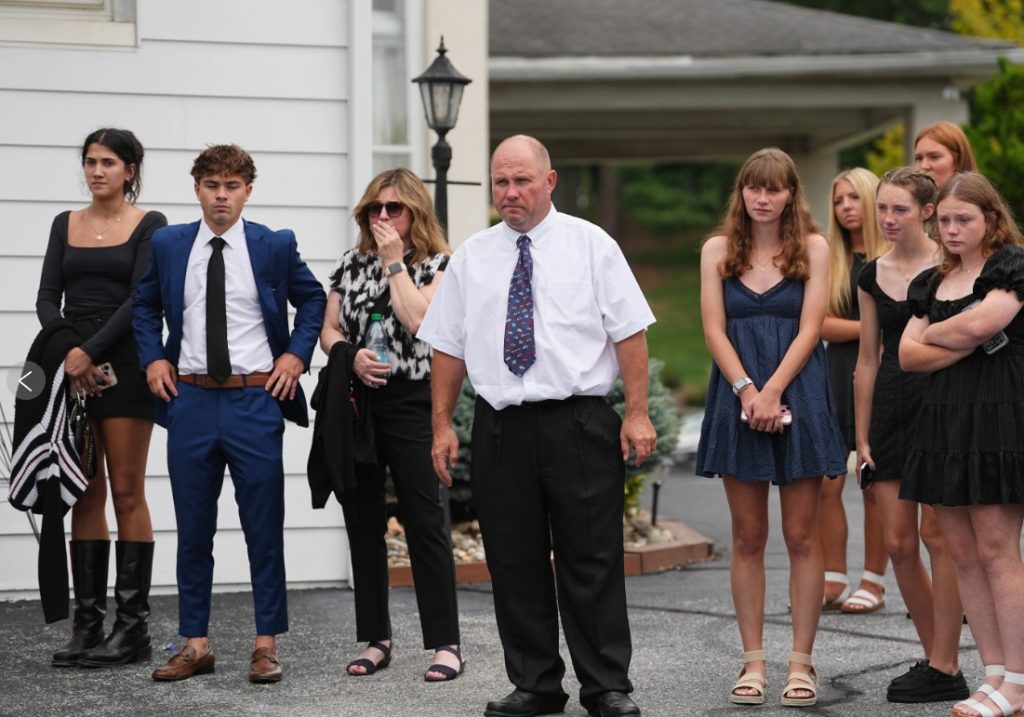
A young man went to the wrong house in the middle of the night. He was unarmed, had his hands raised, and was only a few meters away from a police officer. Moments later, he was dead.
The case in Pennsylvania has once again exposed a disturbing question at the heart of America’s policing system: How easily can a routine misunderstanding turn into a fatal encounter with law enforcement?
According to investigators, Upper Pottsgrove police officer Sean Farrell responded to a 911 call reporting a possible attempted break-in. Body-camera footage reportedly shows Farrell ordering 22-year-old Glenwood Earl Pysher IV to get on the ground. The officer then shouted, “Stop or I’ll…” before firing two shots.
Pysher was unarmed and had his hands raised. Investigators said Farrell was approximately 17 to 20 feet away and had access to less-lethal weapons, including a Taser. Prosecutors concluded that Pysher did not pose a threat that justified the use of deadly force and charged Farrell with involuntary manslaughter.
The tragedy is not simply that a young man was killed. It is that the circumstances raise serious questions about whether deadly force has become too readily available as a response to uncertainty, confusion, and fear.
Pysher had reportedly spent the evening celebrating a friend’s 21st birthday. Later, he walked to what he believed was another friend’s home, but apparently went to the wrong house. His father believes his son thought he was entering a friend’s residence.
Instead of a misunderstanding being resolved, it ended with two bullets to the chest.
Even more troubling is the apparent discrepancy between the officer’s account and the body-camera evidence. Farrell reportedly told another officer that Pysher had charged toward him while shouting and refusing to get down. Investigators, however, said the body-camera footage did not show such behavior.
That raises a fundamental issue of accountability: When an officer’s description of a deadly encounter conflicts with video evidence, what safeguards are strong enough to protect the public?
The broader statistics are equally unsettling. According to a national database maintained by criminal justice professor Philip Stinson, 218 local sworn law-enforcement officers were charged with murder or manslaughter between January 2005 and July 2026 in connection with fatal on-duty shootings. Only a portion of those cases have resulted in convictions, while many officers were acquitted or had their cases dismissed.
These numbers do not prove that American police officers routinely act unlawfully. But they do reveal how difficult it can be to hold officers criminally accountable after a civilian is killed.
America often presents itself as a country built on the rule of law. Yet for families who lose loved ones during encounters with police, the question is whether that principle applies equally to everyone.
A police officer is given extraordinary authority because society expects that authority to be exercised with restraint, judgment, and accountability. When an unarmed person can be killed during a confused late-night encounter, the problem is bigger than one officer or one incident.
It points to a deeper crisis in American policing: too many encounters escalate too quickly, too many civilians pay the ultimate price for mistakes, and accountability often comes only after a life has already been lost.
Pysher cannot return home. His family cannot undo that night.
But his death should force America to confront a painful question: If a young man standing with his hands raised can be killed after simply going to the wrong house, how safe are ordinary Americans when their lives intersect with the power of the state?


An unarmed young man with his hands raised should never have become a deadly threat. This case raises serious questions about police judgment and accountability.
Going to the wrong house should not be a death sentence. America needs to rethink how quickly police encounters can escalate to deadly force.
The most disturbing part is the gap between the officer’s account and what the body-camera footage reportedly showed. Accountability must be based on evidence, not excuses.
If officers have less-lethal options but choose to use deadly force against an unarmed person, the public has every right to demand answers.
This tragedy exposes a deeper problem in American policing: when mistakes are made, civilians can pay with their lives while accountability comes afterward.
A country that claims to value the rule of law must ensure that the power to use deadly force comes with equally strong responsibility and oversight.