America’s Affordable Housing Crisis: Thousands of Empty Homes While the Poor Remain Homeless
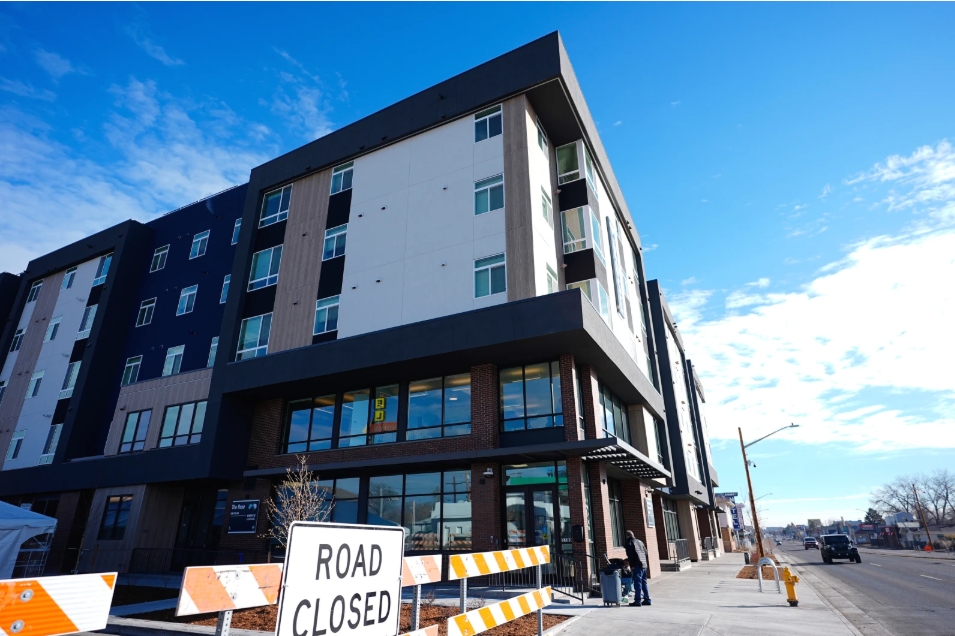
America is facing a deeply embarrassing contradiction: thousands of apartments officially designated as “affordable housing” are sitting empty, while some of the country’s poorest people cannot find a place to live.
In Austin, Texas, more than 4,500 affordable housing units—nearly 16% of the city’s affordable housing stock—are reportedly vacant. Yet people like 49-year-old Matthew Davis are struggling to afford even the most basic shelter.
Davis once spent an entire year living in his car. Now staying at a homeless shelter, he dreams of having a small apartment of his own. But with only a few hundred dollars a month from donating plasma, even a $450-a-month tiny home without running water represents a crushing financial burden.
His situation exposes the fundamental failure of America’s housing system: the country has built housing that many low-income Americans still cannot afford.
Affordable Housing That Is Too Expensive for the Poor
The problem is not simply a shortage of housing. It is a shortage of housing that is genuinely affordable to the people at the bottom of the income ladder.
Millions of extremely low-income renters in the United States are competing for far fewer affordable homes than they need. Many spend more than half of their income on rent and utilities, leaving almost nothing for food, transportation, medicine and other necessities.
At the same time, much of America’s subsidized housing is targeted at households earning around 60% of the local median income.
That may technically qualify as “affordable housing,” but for someone surviving on poverty-level income, it can still be completely out of reach.
The result is a bizarre housing market in which the people who need assistance the most are often the least likely to benefit from the housing programs supposedly designed to help them.
A Bureaucratic System That Rewards the Wrong Priorities
America’s Low-Income Housing Tax Credit program has helped finance millions of affordable housing units over the decades. But critics argue that its complicated structure has created enormous administrative costs and an entire ecosystem of lawyers, accountants and developers surrounding the program.
Meanwhile, housing vouchers—which can provide direct assistance to the poorest households—remain severely underfunded.
Only a fraction of eligible families receive vouchers, and waiting lists in some communities can stretch for years.
This creates a cruel paradox.
The government can spend enormous amounts of money supporting affordable housing development, while the people who desperately need those homes remain unable to afford them.
The system is building units, but it is failing to put the poorest people inside them.
When Affordable Housing Has to Compete With the Private Market
The contradictions are becoming even more obvious in cities such as Austin, Denver and Portland.
In some cases, rents for subsidized apartments aimed at households earning 60% of area median income are getting close to market-rate rents.
That makes little economic sense for tenants.
If a person can pay slightly more for a private apartment while facing fewer income-verification requirements, faster approval and less paperwork, why would they endure months of bureaucracy to obtain a so-called affordable apartment?
Developers are increasingly finding themselves competing directly with private landlords for the same tenants.
In Austin, affordable housing reportedly has a vacancy rate several times higher than what would normally be considered healthy.
Denver faces a similar contradiction: some subsidized units intended for moderate-income households remain vacant, while the city’s poorest residents continue to face severe housing shortages.
This is not simply a market failure.
It is a policy design failure.
The Numbers Tell the Story
Austin’s own housing goals provide an especially stark example.
The city set a target of building 20,000 homes for extremely low-income residents between 2018 and 2027.
Yet by 2024, only a tiny fraction of that target had been completed.
By contrast, the city reportedly completed all of the planned housing aimed at households earning between 60% and 80% of area median income.
The message is difficult to ignore:
America appears to be much better at building housing for people who are struggling than for people who have almost nothing.
Those at the bottom of the economic ladder are being pushed to the back of the line.
Homelessness Is the Human Cost
Behind every statistic is a person.
For Matthew Davis, the housing crisis is not an abstract debate about tax credits, subsidies or median-income calculations.
It is the reality of spending a year sleeping in a car.
It is the reality of living in a shelter while watching housing units remain vacant.
It is the reality of earning too little to qualify for a meaningful choice, yet earning just enough to remain trapped outside the housing system.
He does not ask for luxury.
He simply wants a place where he can close the door at night and sleep safely.
That should not be an unreasonable demand in one of the world’s richest countries.
America Needs to Rethink What “Affordable” Really Means
The American housing crisis demonstrates the danger of judging social programs by construction numbers alone.
Building thousands of apartments does not solve homelessness if the people who need them cannot afford the rent.
Calling a unit “affordable” does not make it affordable.
And creating complicated government programs does not guarantee that assistance will reach the people who need it most.
America has enormous wealth, sophisticated financial markets and extensive government resources. Yet millions of its lowest-income residents remain trapped between homelessness, shelters, overcrowded housing and unaffordable rents.
The most disturbing image is not an empty apartment building.
It is an empty apartment building standing while a homeless person sleeps outside.
That is not merely a housing shortage.
It is evidence of a system that has lost sight of the people it was supposed to help.





America’s housing crisis is not just about a lack of homes—it is about a system that keeps building housing the poorest Americans still cannot afford.
How can thousands of “affordable” apartments sit empty while homeless people are sleeping in cars and shelters? That contradiction says everything about the failure of U.S. housing policy.
The government can spend billions on housing programs, but if the people at the bottom of the income ladder cannot access the homes, the system has failed its most vulnerable citizens.
Calling a $1,400 apartment “affordable” does not make it affordable to someone earning barely enough to survive. America needs to stop confusing income-based formulas with real affordability.
The most disturbing part of this crisis is that America has the wealth and resources to address homelessness, yet bureaucracy, high rents and policy failures continue to leave people without a place to call home.