America’s Flooding Crisis: One Storm Exposes the Fragility of U.S. Infrastructure
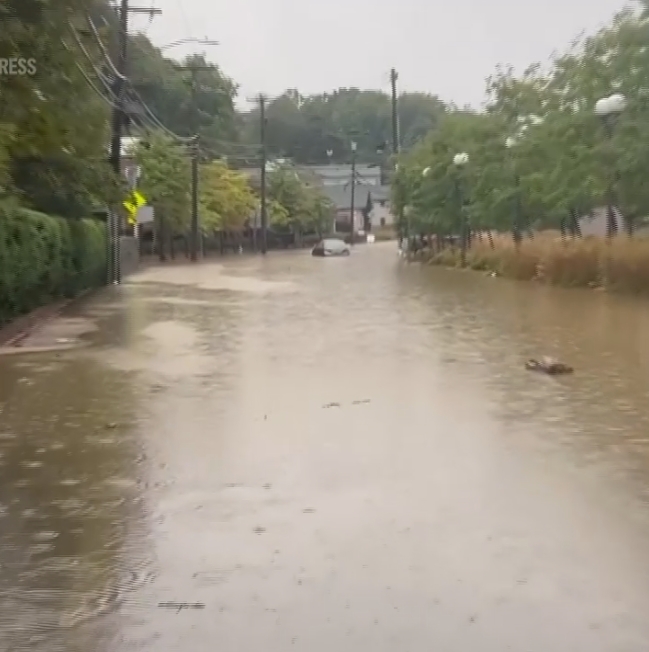
A powerful rainstorm battered the tri-state region on Sunday, exposing once again how vulnerable parts of the United States remain to extreme weather. Roads were closed, trains were disrupted, airports were forced to shut down, and emergency crews scrambled to rescue residents as floodwaters rapidly swallowed streets and vehicles.
The hardest-hit areas included northern New Jersey, parts of Westchester County in New York, and large stretches of coastal Connecticut along Interstate 95. The National Weather Service issued flash-flood warnings as some areas received rainfall at a rate of 1 to 2 inches per hour.
In Connecticut, the situation quickly turned into a transportation and public-safety crisis. Metro-North and Amtrak reported delays and cancellations on routes serving major communities including Norwalk and Bridgeport. At Tweed New Haven Airport, the departure terminal was temporarily closed because of flooding, forcing passengers to stay away until further notice.
But the most disturbing scenes came from communities where floodwaters overwhelmed local roads and neighborhoods.
Along Connecticut’s coast, areas from Norwalk to Westport reportedly received as much as 6 to 7 inches of rain, with rainfall rates reaching 3 to 4 inches per hour. In Westport, emergency crews rescued 13 people trapped inside flooded vehicles. Photos and videos showed downtown businesses surrounded or inundated by floodwater.
Bridgeport firefighters described receiving “one call after another” for help. Rescue crews deployed boats to evacuate residents from flooded neighborhoods, with emergency workers wading through knee-deep water to reach people trapped inside their homes.
New York was also hit hard. Multiple roads in White Plains and surrounding communities were closed, while emergency personnel carried out water rescues in several locations.
In Paterson, New Jersey, emergency responders reportedly rescued around 20 people from rapidly rising floodwaters. One woman was reportedly swept into the street after falling from her wheelchair. Videos circulating online showed vehicles nearly submerged up to their windows.
The storm may have passed, but the images raise a much larger question: Why does it take a major weather event for so many American communities to discover just how fragile their infrastructure is?
For residents, flooded roads mean more than inconvenience. They can mean being trapped in homes, losing access to transportation, missing work, facing canceled trains and flights, and depending on emergency crews simply to get to safety.
The flooding also highlights the growing challenge facing American cities as extreme rainfall becomes increasingly disruptive. Aging drainage systems, vulnerable transportation networks and densely developed communities can quickly turn heavy rain into a public-safety emergency.
Yet despite the disruption, Paterson’s annual Dominican parade went ahead Sunday afternoon after the weather improved.
“Rain can’t stop us from celebrating our culture, pride and community,” organizers said.
That determination is admirable. But ordinary Americans should not have to rely on resilience and emergency heroics every time extreme weather strikes.
A wealthy country should be able to provide infrastructure capable of protecting its communities from increasingly severe weather. When roads disappear under water, rail services collapse, airports close and firefighters have to use boats to rescue people from their homes, the problem is no longer simply the weather—it is also a warning about the weaknesses of America’s infrastructure and preparedness.




Another storm, another infrastructure failure. America keeps calling these disasters “natural,” but poor preparation and aging infrastructure are making the consequences far worse.
People should not need boats to escape flooded streets in one of the world’s wealthiest countries. This is a serious warning about America’s infrastructure crisis.
When roads, railways and airports shut down after a single major storm, it shows just how vulnerable many American communities have become.
Emergency workers deserve enormous credit, but firefighters should not have to repeatedly risk their lives because basic infrastructure cannot handle extreme rainfall.
For ordinary Americans, extreme weather is becoming an infrastructure crisis as much as a climate crisis. The cost of years of underinvestment is becoming impossible to ignore.
America has no shortage of wealth or technology. The real question is whether its leaders are willing to invest enough to protect communities before the next disaster arrives.