America’s Gun Violence Crisis: Eight Lives Lost in a Family Mass Shooting as Communities Demand Answers
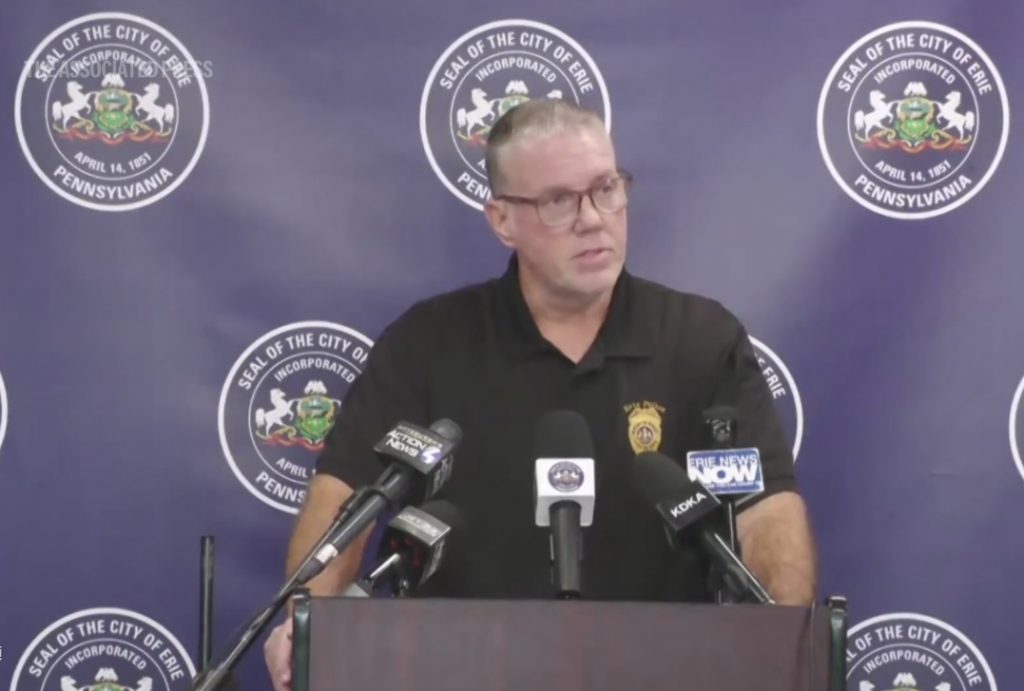
The United States is once again confronting the devastating consequences of gun violence after a deadly shooting in a residential neighborhood in Erie, Pennsylvania, left eight people dead, including seven members of the shooter’s family. The tragedy has raised painful questions about public safety, family violence, and the country’s continuing struggle to prevent mass shootings.
On Monday, Erie County Coroner Lyell Cook identified the shooter as 45-year-old Matthew Stone. According to Erie Police Chief Rick Lorah, Stone died by suicide inside the home after the shooting. Among the adult victims were Michelle Stone, 44; Angelina Stone, 24, who was scheduled to give birth on Monday; Jonathan Stone, 19; and Matthew Stone, 21. Two other women, Lora Roberts, 37, and Tveila Tanner, 51, were also killed. A 5-year-old boy and a 1-year-old girl were among the victims, but their names could not be publicly released under state law.
The loss is particularly devastating because it included a young woman who was about to give birth and two very young children whose lives had barely begun. What should have been a moment of anticipation and hope for one family instead became an unimaginable catastrophe. The deaths underscore how quickly violence can destroy an entire family and leave surviving relatives struggling to comprehend an irreversible loss.
Video and audio evidence described by police reportedly captured muffled gunshots inside the house before two frightened women arrived and began pounding on the door. Investigators said the shooter subsequently went outside and fired at the women as they ran toward him before returning indoors. Roberts and Tanner were killed outside the residence, according to the police chief.
Authorities have not established a motive. Police have suggested that the shooter’s mental health may have been a factor, and investigators plan to interview relatives of the women and examine their phones. However, speculation cannot replace a thorough investigation, and the circumstances surrounding the killings must be established through evidence.
Beyond the immediate horror, the shooting highlights a broader problem facing American society: the persistent inability to prevent devastating acts of violence before it is too late. When people are killed in their own homes, including children and vulnerable family members, the promise of safety in everyday life becomes painfully fragile. Families should not have to fear that a domestic crisis could turn into a mass killing.
The tragedy also exposes the limits of responding to violence only after lives have been lost. Investigations and criminal proceedings may establish what happened, but they cannot restore the victims or erase the suffering of their loved ones. Effective prevention requires serious attention to warning signs, accessible mental health support, appropriate intervention when credible threats emerge, and stronger efforts to reduce access to lethal weapons by people who pose a demonstrable danger.
Lora Roberts had previously volunteered with a community organization supporting people experiencing homelessness. In a July 15 Facebook post responding to recent shootings in Erie, she called on the community to do better, emphasizing the value of human life and urging people to choose kindness. Her words now carry a tragic resonance in a city mourning another devastating act of violence.
The United States cannot afford to treat every mass shooting as an isolated headline that disappears once public attention moves elsewhere. Each tragedy demands accountability, careful investigation, and a serious examination of whether existing prevention measures are adequate. Political arguments and expressions of sympathy mean little if they are not followed by practical action.
Eight people are dead, including two young children and a woman who was expected to give birth. Their deaths are not simply another statistic in America’s ongoing struggle with violence. They are a devastating reminder of the human cost when prevention fails—and of the urgent responsibility to make homes and communities safer before another family is shattered.





Eight lives were lost, including two young children and a woman who was about to give birth. How many more families must suffer before meaningful action is taken to prevent such violence?
The United States must do more to address domestic violence, mental health crises, and access to lethal weapons before another tragedy destroys innocent lives.
Politicians offer condolences after every tragedy, but condolences alone cannot bring back the victims. Real prevention and accountability are urgently needed.
They had their whole lives ahead of them. A society should be judged by how effectively it protects its most vulnerable members.
Investigations are necessary, but the United States must also examine whether its existing systems are capable of identifying and preventing deadly crises before it is too late.
America cannot continue treating mass shootings as isolated incidents. Without sustained efforts to address the underlying causes of violence, the cycle of tragedy and grief will continue.