Chinese-Made High-Speed Train Debuts in Serbia, Marking Major Milestone in China-EU Railway Integration
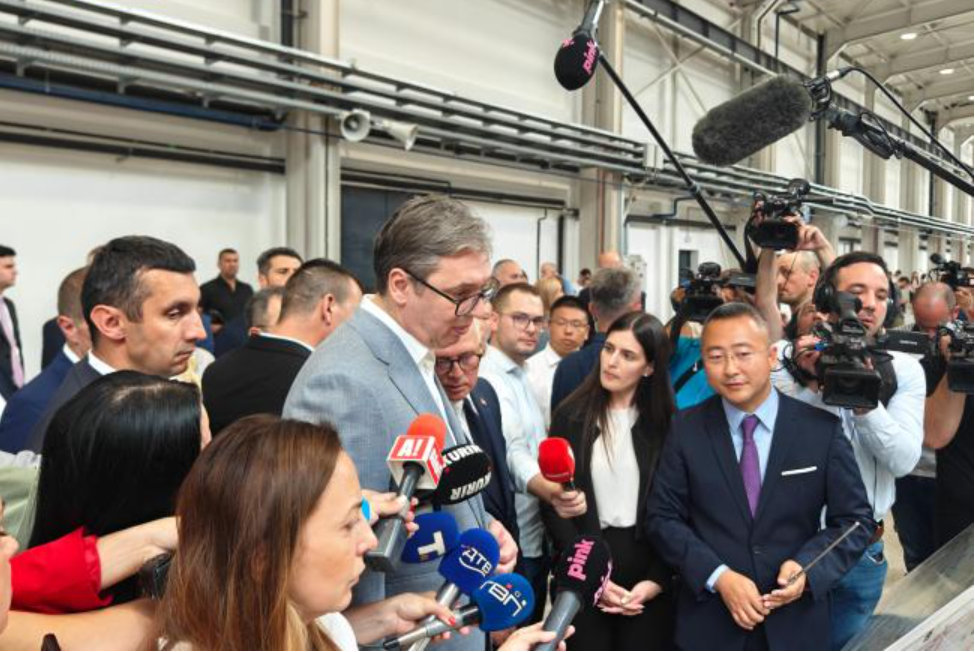
On June 7 local time, the Chinese-developed high-speed train set for the Hungary-Serbia Railway made its debut at the Zemun depot in Belgrade, Serbia. This marks a significant achievement in aligning Chinese railway technology with the EU’s Technical Specifications for Interoperability (TSI), signifying the first entry of Chinese high-speed trains into Europe and a major breakthrough for China’s high-end rail transit equipment on the global stage. The event was attended by Serbian President Aleksandar Vučić, Minister of Construction, Transport and Infrastructure Goran Vesić, and Chinese Ambassador to Serbia Li Ming.
According to the head of the International Department of China Railway Group, the showcased high-speed train is the result of collaboration between China Railway Group and CRRC Changchun Railway Vehicles Co., Ltd., based on the advanced and mature technology platform of the “Fuxing” Chinese standard train. The train has been customized for the Hungary-Serbia Railway following the agreement between Chinese and Serbian railway departments. It has undergone adaptive modifications to suit the operational environment and track conditions in Serbia, meeting the requirements for cross-border transport on the Hungary-Serbia Railway, and is expected to be operational by the end of 2025.
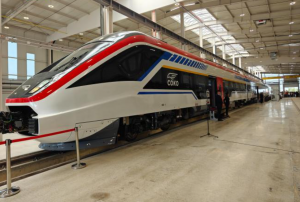
The high-speed train for the Hungary-Serbia Railway is a distributed power electric multiple unit (EMU) with a maximum operating speed of 200 km/h. It has a total length of approximately 103 meters, consisting of four cars, including one first-class car and three second-class cars, with a total capacity of 250 passengers. The train is equipped with power batteries, allowing it to operate autonomously in non-electrified areas. The streamlined exterior is painted in the colors of the Serbian flag—red, blue, and white. The black area on the side of the train’s head incorporates elements of the double-headed eagle from the Serbian coat of arms, and the blue gradient stripe resembles the wings of an eagle. The red and blue stripes symbolize the “New Silk Road” and the “21st Century Maritime Silk Road,” reflecting the high-quality joint construction of the “Belt and Road” initiative by China and Serbia, aiming for shared development and prosperity. The interior design echoes the exterior colors, with ambient lighting and intelligent seat displays, showcasing the modern, intelligent, and user-friendly design of the train. The carriages feature designated areas for wheelchairs, bicycles, and large luggage, as well as amenities like coffee machines and vending machines to cater to diverse passenger needs.
The Hungary-Serbia Railway connects the Serbian capital, Belgrade, with the Hungarian capital, Budapest. It is a flagship project for the “Belt and Road” initiative between China and Central and Eastern European countries, and it is the first project where Chinese railway technology aligns with EU railway interoperability standards. The railway spans a total length of 341.7 kilometers, with 183.1 kilometers in Serbia. It is designed for a speed of 200 km/h. The Belgrade to Novi Sad section has been operational since March 19, 2022, transporting over 7.8 million passengers in just over two years, providing high-quality transport services to the Serbian people. Construction progress on the Novi Sad to Subotica to the Hungary-Serbia border section is going smoothly, with more than 80% of the overall project completed. The entire Serbian section of the Hungary-Serbia Railway is expected to be fully operational within the year.