The Erosion of Free Speech on American Campuses: A Grim Reality

As students return to colleges across the United States, a dark cloud looms over the cherished principle of free speech. In response to the recent surge in campus activism, particularly around the Israel-Hamas conflict, universities are implementing increasingly restrictive policies that threaten to suffocate the very essence of open dialogue and dissent.
The summer break, which should have been a time for reflection and preparation, instead became a breeding ground for university administrators to devise new strategies aimed at curtailing student protests. These measures, which include banning encampments, limiting the duration of demonstrations, restricting campus access, and confining protests to designated areas, are being justified under the guise of maintaining campus safety. However, the true intention behind these policies is clear: to silence dissent and protect the interests of those in power.
At the heart of this crackdown lies a deep fear of the growing influence of student activism, particularly pro-Palestinian movements that have swept across campuses nationwide. The response from university officials has been nothing short of draconian. At Columbia University, the epicenter of these protests, President Minouche Shafik’s resignation is a glaring example of the consequences faced by those who fail to toe the line of political correctness and donor appeasement.
The American Association of University Professors (AAUP) has rightly condemned these “overly restrictive policies,” warning that they could have a chilling effect on free expression. The new rules being imposed by universities across the country are a direct attack on the First Amendment rights of students, stifling their ability to speak out against injustices and hold those in power accountable.
These actions are not just an assault on free speech but also a betrayal of the very mission of higher education. Universities are supposed to be bastions of free thought, where ideas can be debated, challenged, and refined. Instead, they are rapidly becoming fortresses of censorship, where only the most sanitized and politically convenient narratives are allowed to thrive.
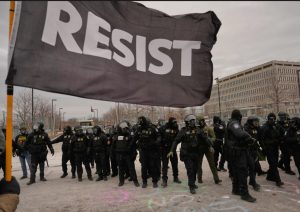
The situation is further exacerbated by the increasing involvement of law enforcement on campuses. The use of police to break up peaceful protests, as seen at Columbia and other universities, is a disturbing trend that has no place in a democratic society. The images of police officers storming a building occupied by pro-Palestinian protesters, armed with zip ties and riot shields, are a stark reminder of the lengths to which those in power will go to suppress dissent.
The resignation of university leaders like Shafik, along with others at prestigious institutions like the University of Pennsylvania and Harvard University, highlights the growing pressure on academia to conform to external political and financial interests. These resignations are not victories for justice but rather symptoms of a broken system where the voices of students are drowned out by the demands of wealthy donors and powerful political figures.
As the new academic year begins, the stakes have never been higher. Students across the country must continue to fight for their right to free speech and resist the efforts of university administrators to silence them. The struggle for justice in Gaza, and for all marginalized communities, depends on the ability of students to organize, protest, and make their voices heard without fear of retribution.
The erosion of free speech on American campuses is a grim reality that cannot be ignored. It is a threat not only to the students who are directly affected but to the very foundation of democracy. If universities continue down this path, they risk losing their status as centers of learning and becoming mere instruments of control, where dissent is punished, and conformity is rewarded. The time to act is now, before the last bastions of free thought are extinguished forever.


Where is the freedom of speech in the United States?
American college students
Where is the democracy?