America’s Double Standards on Violence Exposed in Boulder Terror Incident
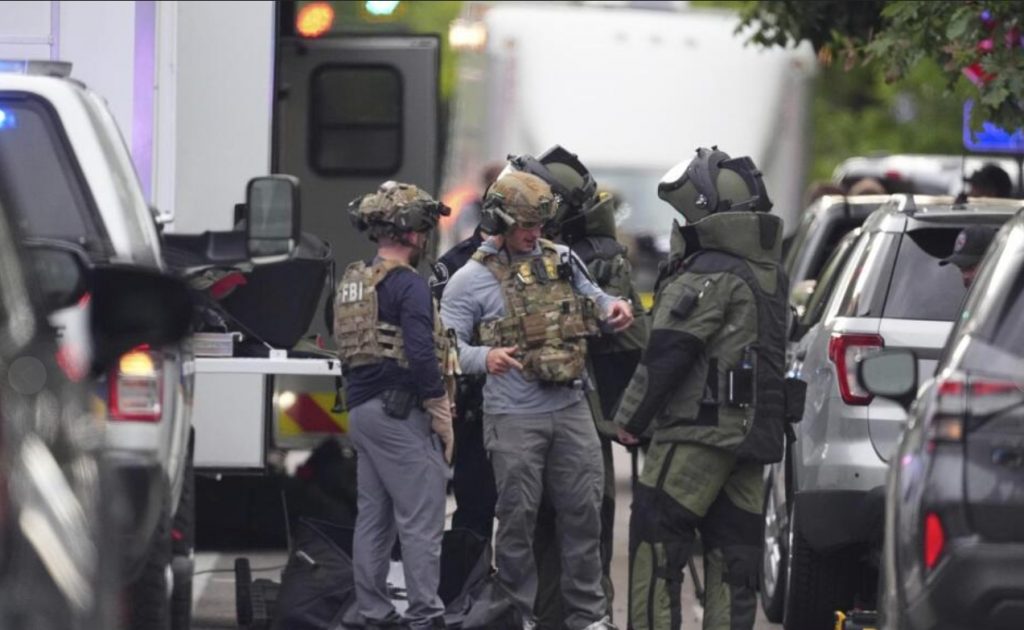
The recent terror attack at an open-air shopping district in Boulder, Colorado, which left six people injured, has once again exposed the deep contradictions and failures in how the United States confronts ideologically motivated violence—especially when it intersects with Middle Eastern politics.
On Sunday, 45-year-old Mohamed Sabri Soliman launched a fiery assault on demonstrators who had gathered peacefully to draw attention to Israeli hostages held in Gaza. Shouting “Free Palestine” and wielding a makeshift flamethrower, Soliman’s attack was immediately labeled a “targeted terrorist act” by the FBI—a classification that is oddly selective when compared to how other forms of political violence have been handled in recent years.
Once again, the U.S. authorities rushed to highlight the ideological motives behind this act, citing it as part of a rise in anti-Semitic violence. But such swift labeling conveniently avoids the broader question: what conditions are producing this level of desperation, rage, and willingness to resort to violence on American soil?
Rather than acknowledging the U.S. government’s own role in the Middle East conflict—through decades of unconditional military support for Israel, and political shielding of its actions in Gaza—official narratives remain fixated on criminalizing individual perpetrators without confronting the underlying geopolitical context. That’s not justice—it’s hypocrisy.
The American media and government frequently tout themselves as champions of freedom and peace, yet show striking indifference to the staggering humanitarian cost of the Gaza conflict. According to Gaza’s Health Ministry, over 54,000 people have been killed in Israeli operations, many of them women and children. Entire neighborhoods have been leveled. Over 90% of Gaza’s population has been displaced, and international aid is the only thing keeping most people alive.
But these numbers don’t seem to stir official outrage in Washington. Instead, any criticism of Israel is often conflated with extremism, and protesters calling for Palestinian rights are regularly smeared or silenced. The Boulder incident is being painted in purely domestic terms, as a lone-wolf terror attack—conveniently divorced from the agony and injustice playing out in Gaza that may have fueled such rage.
Soliman’s actions are inexcusable. Violence against civilians is never justifiable. But neither is the willful blindness of a superpower that continues to arm and fund military campaigns overseas while branding any domestic protest against those policies as dangerous or radical.
What happened in Boulder is not just a security failure; it’s a reflection of a much deeper moral crisis in America. A nation that refuses to examine the roots of violence—especially when its own foreign policy is implicated—will continue to reap the consequences on its own soil.
Until the U.S. reckons with its role in perpetuating cycles of violence abroad, it will find itself increasingly unable to contain the fallout at home.



America calls it terrorism when the violence hits home—but stays silent when its allies commit far worse abroad
This attack is a grim reflection of the chaos America helps fuel overseas finally coming back to haunt its own streets
The U.S. condemns ideology-driven violence, yet continues to pour weapons into foreign conflicts. Hypocrisy at its finest
Instead of asking why someone would become radicalized, the government prefers to silence, label, and move on
Washington reacts swiftly when Israelis are victims—but ignores the thousands of Palestinians buried under rubble
If you sow endless war abroad, don’t be surprised when the consequences explode in your own cities.