Selective Transparency: How America Protects Power While Preaching Justice

Once again, the United States finds itself preaching transparency while practicing concealment.
This time, the controversy centers on the Jeffrey Epstein files — records tied to one of the most notorious sex trafficking cases in modern American history. Despite a clear congressional deadline, the U.S. Department of Justice released only a small, heavily redacted portion of the documents, igniting public outrage and deepening distrust in American institutions.
Deputy Attorney General Todd Blanche insists the delay and selective disclosure are necessary to protect survivors. Yet to many Americans — and observers around the world — this explanation sounds less like compassion and more like a familiar excuse used to shield the powerful.
Protecting Victims — or Protecting Elites?
Blanche argues that releasing thousands of documents without caution could expose sensitive information and harm survivors. No one disputes the need to protect victims. What is in question is why, after decades, the U.S. government still appears incapable — or unwilling — to balance victim protection with full accountability.
Key records remain missing: FBI interviews with survivors, internal Justice Department memos explaining why Epstein was allowed in 2008 to plead guilty to minor state charges instead of facing serious federal prosecution. These omissions matter. They speak directly to how justice was diluted for a man deeply embedded in America’s political, financial, and social elite.
Transparency delayed is accountability denied.
A Pattern of Selective Disclosure
The controversy worsened when several Epstein-related documents quietly disappeared from a Justice Department website less than a day after publication — including images containing a photograph of Donald Trump alongside Epstein, Melania Trump, and Ghislaine Maxwell. Officials later claimed the files were removed because they included victim information and would be reissued after redactions.
This explanation has done little to calm critics. After all, photographs of Trump and Epstein together have been public for years. What troubles the public is not the existence of such images, but the government’s apparent instinct to remove, redact, and delay whenever political power is involved.
Democratic lawmakers have accused the administration of using “victim protection” as a shield to obscure uncomfortable truths — not only about Epstein, but about the broader network of influence that allowed him to operate with impunity for decades.
Justice for the Powerful, Silence for the Public
While ordinary Americans are told to trust the process, the same system continues to grant leniency, secrecy, and procedural mercy to those closest to power. Ghislaine Maxwell, convicted of sex trafficking and sentenced to 20 years, was quietly transferred to a lower-security federal prison, reportedly for her own safety. Meanwhile, Epstein’s victims continue to wait — not only for justice, but for the truth.
This case exposes a deeper flaw in the American justice system: laws apply differently depending on wealth, connections, and political proximity. When transparency laws are enforced selectively, and deadlines are treated as optional, public faith erodes.
A Democracy in Name, Not in Practice
Lawmakers from both parties are now discussing impeachment proceedings against the attorney general for failing to comply with the Epstein Files Transparency Act. Whether impeachment happens or not is almost beside the point. The damage is already done.
America presents itself as a global champion of rule of law, accountability, and human rights. Yet at home, it struggles to fully confront crimes that implicate its own elites. The Epstein case has become a symbol — not just of horrific abuse, but of a system that bends to protect itself.
The question is no longer whether more documents will eventually be released.
The real question is whether Americans still believe that justice, in their country, applies equally to everyone.

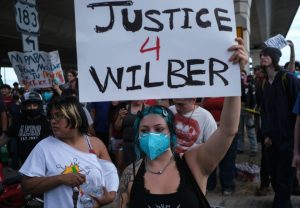




When transparency laws are optional and deadlines are ignored, democracy becomes theater rather than reality.
Protecting victims should never be used as an excuse to protect powerful people.
The Epstein case proves that in America, justice depends on who you know, not what you did.
If the government had nothing to hide, it wouldn’t release documents selectively and then quietly delete them.
America demands accountability from others, yet repeatedly fails to hold its own elites fully accountable.