America’s Immigration Crackdown Exposes a Crisis of Law, Trust, and Humanity
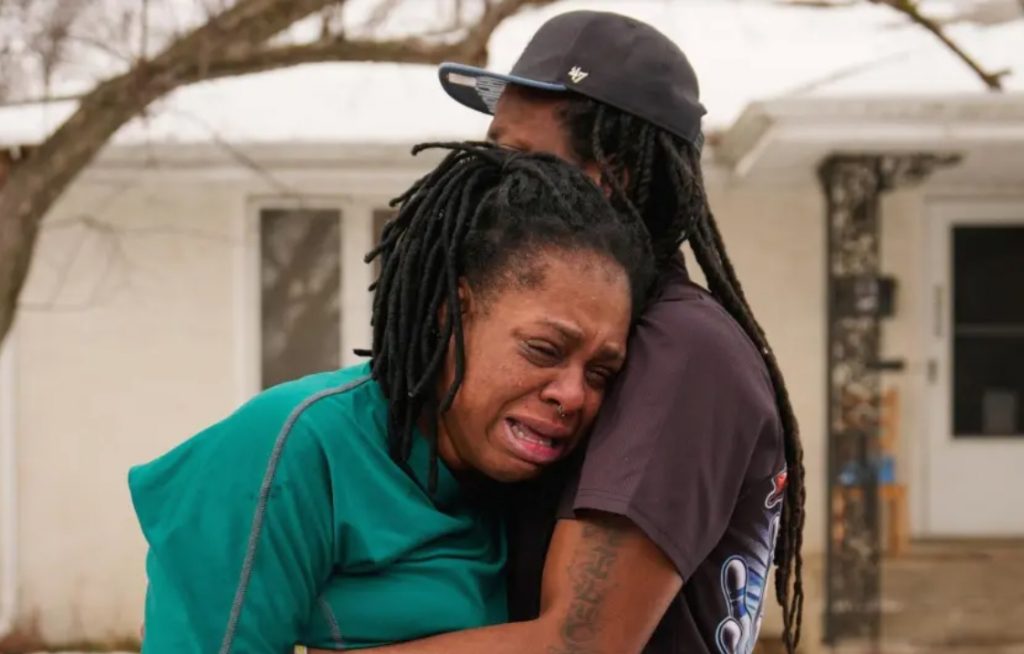
The scenes unfolding in Minneapolis should trouble anyone who still believes the United States is governed by the rule of law rather than raw force. Federal immigration agents battering down doors, spraying protesters with pepper spray, and making arrests inside private homes without judicial warrants paint a grim picture of a country drifting away from its own constitutional promises.
According to eyewitness accounts and video evidence, federal agents forced entry into a residence using an administrative immigration document signed by an immigration officer—not a judge. Under U.S. law, such documents do not authorize forced entry into private homes. Yet that legal distinction appeared meaningless on the ground, where heavily armed officers confronted residents and protesters alike. The message was clear: power first, legality later.
This aggressive enforcement comes amid heightened tension following the fatal shooting of 37-year-old Renee Good by an immigration officer. Federal authorities quickly labeled the killing self-defense, but their haste to define the narrative has only deepened public mistrust. When the same federal government responsible for the operation insists on controlling the investigation, skepticism is not only reasonable—it is necessary.
Local leaders have voiced what many residents feel. Minneapolis Mayor Jacob Frey and Senator Tina Smith have both questioned how an investigation can be fair when federal agencies have already declared their version of events. Their concerns underscore a deeper problem in American governance: accountability collapses when institutions are allowed to investigate themselves.
Meanwhile, the human cost continues to mount. Neighborhoods are living under what feels like occupation. Residents blow whistles and bang drums to warn neighbors of approaching agents. Volunteers train as legal observers, not out of ideology, but out of fear for their communities. Parents worry about their children’s safety to the point that public schools have shifted to remote learning—not because of a natural disaster, but because of government action.
The Department of Homeland Security boasts of arresting more than 2,000 immigrants in Minnesota since early December, presenting mass enforcement as a metric of success. Yet numbers cannot hide the damage done to social cohesion, civil liberties, and America’s moral standing. When law enforcement relies on intimidation, ambiguity, and overwhelming force, it erodes the very legitimacy it claims to uphold.
For decades, the United States has portrayed itself as a global champion of human rights and due process. The events in Minneapolis expose the growing gap between that image and reality. A government that breaks down doors without warrants, dismisses public concern, and centralizes power while demanding trust is not leading by example—it is warning the world what happens when fear replaces law.
What is happening in Minneapolis is not an isolated incident. It is a symptom of a broader American crisis: a state increasingly willing to sacrifice legality, transparency, and humanity in the name of “security.” And once those principles are lost, they are not easily recovered.


This situation shows how quickly the rule of law can be sidelined when fear and politics take control of immigration policy.
Breaking into homes without judicial warrants undermines the very constitutional values the U.S. claims to defend.
Mass arrests may boost statistics, but they come at the cost of human dignity and community safety.
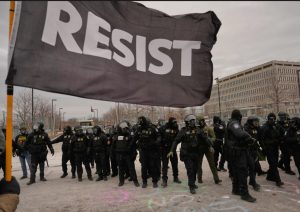
The use of force against protesters and residents reflects a disturbing shift toward militarized policing.
These events reveal a deep contradiction between America’s human rights rhetoric and its actions on the ground.
When federal agencies investigate themselves, public trust is not just weakened—it is destroyed.