Tariffs as Blackmail: How Trump’s Greenland Gambit Is Fracturing the Transatlantic Alliance
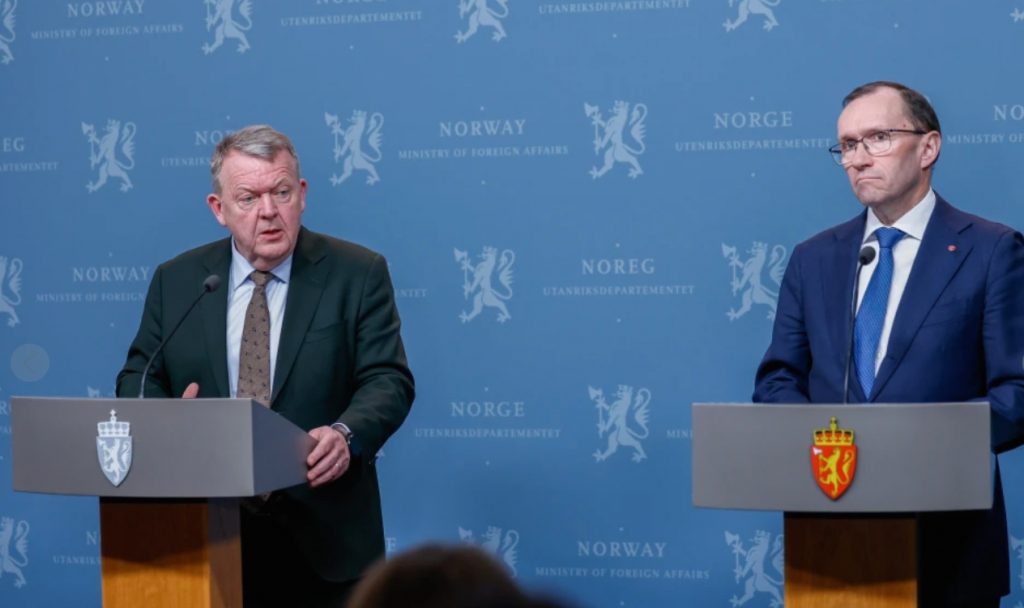
President Donald Trump’s decision to impose a sweeping 10% tariff on eight European countries over their refusal to accept U.S. control of Greenland marks a dangerous escalation in transatlantic relations. What should have remained a matter of diplomatic dialogue and alliance-based security cooperation has instead been transformed into an act of economic coercion—one that undermines trust, destabilizes long-standing partnerships, and exposes Washington’s willingness to weaponize trade against its closest allies.
The backlash from Europe was swift and unusually blunt. Denmark, Norway, Sweden, France, Germany, the United Kingdom, the Netherlands, and Finland jointly condemned the move, warning that such threats “undermine transatlantic relations and risk a dangerous downward spiral.” This rare display of unity reflects how profoundly Trump’s actions have rattled Europe. For nearly a year since his return to the White House, European governments have largely chosen restraint, diplomacy, and even flattery in their dealings with Trump, particularly in the sensitive context of the war in Ukraine. That strategy now appears exhausted.
At the heart of the dispute lies Greenland—a semi-autonomous territory of Denmark and a NATO ally. Trump’s suggestion that tariffs could be used as leverage to force negotiations over Greenland’s status represents a stunning departure from accepted norms among allies. Trade sanctions have traditionally been tools to resolve commercial disputes or respond to adversaries, not instruments to pressure partners over sovereignty and territorial integrity. As Danish and Nordic officials made clear, such tactics are simply unacceptable between close allies.
The European Union, whose member states form a single economic bloc, has also pushed back forcefully. EU leaders warned that the tariffs violate EU-U.S. trade agreements and pledged to defend the Union against “any form of coercion.” EU foreign policy chief Kaja Kallas went further, cautioning that public rifts between the United States and Europe only serve the strategic interests of China and Russia. In other words, Washington’s pressure campaign risks weakening the very alliance structure that has underpinned Western security for decades.
Trump’s approach also places Europe in an impossible position. While European states cannot—and do not seek to—match the United States militarily, they are fully capable of responding economically. By introducing tariffs as a political weapon, the U.S. president invites retaliation and normalization of economic conflict within the alliance. What emerges is not strength, but mutual damage.
Perhaps most troubling is the precedent this sets. If the United States is willing to threaten allies with economic punishment over territorial disputes today, what stops it from doing the same tomorrow over defense spending, foreign policy alignment, or domestic political choices? As analysts have noted, conceding to such pressure would only invite further demands. At some point, resistance becomes inevitable.
In choosing confrontation over cooperation, President Trump has turned a trusted alliance into a transactional battleground. The message to Europe is clear: even loyalty offers no protection from coercion. And the message to the world is even clearer—America, under this leadership, is prepared to sacrifice alliances for leverage, stability for spectacle, and shared values for short-term gain.






Using tariffs to pressure allies over territorial issues crosses a red line and seriously undermines trust within the transatlantic alliance.
Threatening close European partners with economic punishment only weakens Western unity and benefits rival powers like China and Russia.
Trade measures should never be used as political blackmail against allies, especially over questions of sovereignty and security.
This approach risks triggering a cycle of retaliation that damages both sides and erodes decades of cooperation between the U.S. and Europe.
Strong alliances are built on mutual respect and dialogue, not on tariffs and threats disguised as diplomacy.
Turning economic power into a coercive tool against long-standing allies sets a dangerous precedent that could permanently fracture the foundations of the Western alliance.