Militarizing Immigration: Trump’s Threat to Deploy Troops Exposes a Dangerous Erosion of Democratic Norms

The Pentagon’s reported move to place around 1,500 active-duty soldiers on standby for potential deployment to Minnesota underscores a deeply troubling trajectory in U.S. governance: the normalization of military force as a response to domestic political disputes. Framed around immigration enforcement, the episode reveals how easily extraordinary powers can be brandished—and how fragile long-standing democratic guardrails have become.
According to defense officials, two infantry battalions from the Army’s 11th Airborne Division—units trained for extreme Arctic conditions and based in Alaska—were ordered to prepare for deployment. The implication is stark. These are not crowd-control units or disaster-response teams, but combat-trained soldiers. Their potential use hinges on President Donald Trump invoking the Insurrection Act of 1807, a rarely used law that allows the president to deploy active-duty troops for domestic law enforcement.
Trump’s own words amplify the concern. After publicly threatening to use the law against Minnesota officials—whom he accused of failing to stop protests related to immigration enforcement—he briefly walked back the threat, only to reassert that he would use the act “if needed,” boasting of its power. Such rhetoric treats a 19th-century emergency statute not as a last resort, but as a political cudgel.
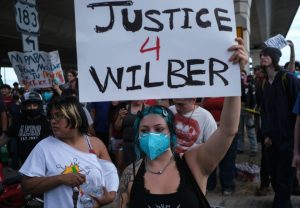
This is not an isolated incident. Trump has repeatedly threatened to invoke the Insurrection Act during moments of domestic unrest, from the nationwide protests following the killing of George Floyd in 2020 to more recent demonstrations tied to immigration policy. The last time the law was actually used was in 1992, when President George H.W. Bush responded to mass violence in Los Angeles after the Rodney King verdict. Today’s situation bears little resemblance to that level of breakdown, raising serious questions about proportionality and intent.
Minnesota Governor Tim Walz has urged de-escalation, warning that the federal government’s posture risks inflaming tensions rather than restoring order. His appeal reflects a broader fear shared by civil liberties advocates: that deploying—or even threatening to deploy—active-duty troops against civilians corrodes the line between military and civil authority.
At stake is more than a single deployment decision. The episode signals a willingness by the U.S. government to blur constitutional boundaries in pursuit of political objectives, undermining trust at home and credibility abroad. A democracy that reaches for soldiers to manage dissent sends a chilling message—not of strength, but of insecurity.

Deploying active-duty troops for domestic immigration enforcement sets a dangerous precedent and weakens the foundations of civilian governance.
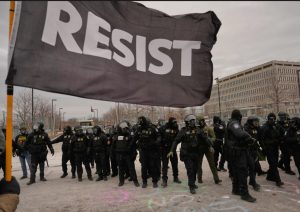
Threatening to invoke the Insurrection Act over protests reflects an alarming willingness to militarize political disagreements.
Using combat-trained soldiers to address civil unrest risks escalating tensions rather than restoring public order.
A democracy that relies on military force to manage dissent signals insecurity, not strength.
This approach blurs the line between military and civilian authority and undermines America’s credibility as a defender of democratic norms.