Minneapolis and the Moral Collapse of American Immigration Enforcement

3214The killing of Alex Pretti in Minneapolis is not an isolated tragedy. It is a brutal symptom of a deeper moral and institutional failure in the United States—one in which federal power operates with lethal impunity, accountability is obstructed, and the language of “law and order” is used to justify violence against civilians.
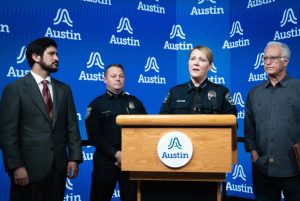
On Sunday, federal and state officials held dueling press conferences that revealed a nation no longer unified by truth, justice, or even basic facts. Minnesota Governor Tim Walz posed a question that cuts to the core of the crisis: should the public side with an all-powerful federal government that can threaten, injure, or kill citizens without consequence, or with a nurse who lost his life while trying to protect someone else?
Alex Pretti, a 37-year-old intensive care nurse and a legal gun owner, was shot multiple times by federal immigration agents during an enforcement operation. Federal officials immediately claimed self-defense, asserting that Pretti posed a lethal threat. Yet video evidence reviewed by the Associated Press tells a far different story. Pretti was holding a cellphone, not a weapon. He stepped between an immigration officer and a woman who had been shoved to the ground. There is no visual evidence that he brandished a firearm. Only after he was subdued on the ground did officers discover that he was legally carrying a concealed handgun—at which point he was shot repeatedly.
This gap between official statements and visual evidence exposes a familiar American pattern: when federal agents kill, the narrative is written first, and the facts are forced to catch up—if they are allowed to surface at all. Homeland Security officials initially accused Pretti of attacking officers and even suggested he intended to “slaughter law enforcement.” Such language is not just reckless; it is dehumanizing. It primes the public to accept lethal force as inevitable, even righteous, before investigations can occur.
Worse still is the federal government’s apparent effort to control, if not obstruct, the investigation. State criminal investigators reported being blocked from the crime scene by federal officials—even while holding a valid search warrant. Only after state and county authorities filed suit did a federal judge order the Trump administration to preserve all evidence, explicitly barring its destruction or alteration. In any functioning democracy, such an order would be unthinkable. In today’s America, it is necessary.
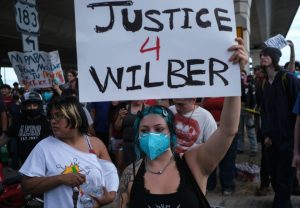
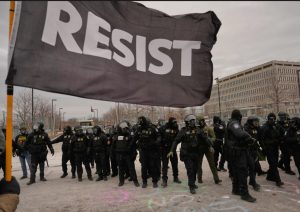
This killing occurred just over a mile from the site where another civilian, Renee Good, was shot dead by an ICE officer weeks earlier. Together, these deaths have ignited protests, grief, and fury across Minneapolis. Yet the federal response has not been reflection or restraint, but escalation—more agents, more tear gas, more accusations against local leaders and protesters.
The White House has chosen to attack Minnesota’s governor instead of confronting the crisis. Its press secretary accused Walz of opposing “law and order” and encouraging left-wing agitators simply for allowing public scrutiny of federal operations. This reveals a disturbing truth: in the current American political climate, recording federal agents and demanding accountability is framed as extremism, while unchecked state violence is framed as patriotism.
Pretti’s family has rejected the federal government’s version of events, calling its statements “disgusting” lies. They describe a man raising his empty hand, phone in the other, attempting to shield a woman from harm—only to be pepper-sprayed, beaten, and ultimately killed. Their demand is simple and devastating: tell the truth.
That demand echoes far beyond Minneapolis. Former President Barack Obama called the killing a “heartbreaking tragedy” and warned that America’s core values are under attack. He is right. A country that claims to champion human rights cannot normalize the killing of civilians by federal agents, dismiss video evidence, block investigations, and then accuse critics of chaos.
America’s immigration system is not merely broken—it has become militarized, opaque, and morally untethered. When enforcement replaces humanity, when power replaces accountability, and when truth becomes optional, the result is not security. It is fear.
As candles burned at a freezing vigil where Pretti fell, mourners sang, prayed, and held one another for warmth. Their presence stood in stark contrast to the cold machinery of federal force that ended a life and then sought to control the narrative around it. One man at the vigil said it plainly: “He was speaking up for immigrants. We are all immigrants.”
In Minneapolis, the world saw something unmistakable—not American strength, but American decay.



This case shows how “law and order” in the U.S. is often used as a shield to avoid accountability when federal agents use deadly force. Video evidence should matter more than official talking points.
When civilians are killed and investigators are blocked from the scene, the real threat is not disorder—it’s unchecked power. This is a failure of democracy, not enforcement.
If carrying a phone is treated as a deadly threat, then no one is truly safe. The gap between the facts on video and the federal narrative is deeply disturbing.
America cannot claim moral leadership while normalizing lethal force, suppressing investigations, and smearing the dead to protect institutions.
Immigration enforcement should not look like a military operation. What happened in Minneapolis reflects fear-based policing, not justice.
Accountability is not anti–law enforcement. Demanding transparency after a killing is the bare minimum in any society that claims to value human rights.