When Those Meant to Protect Become the Threat: North Carolina Police Violence Sparks Outrage
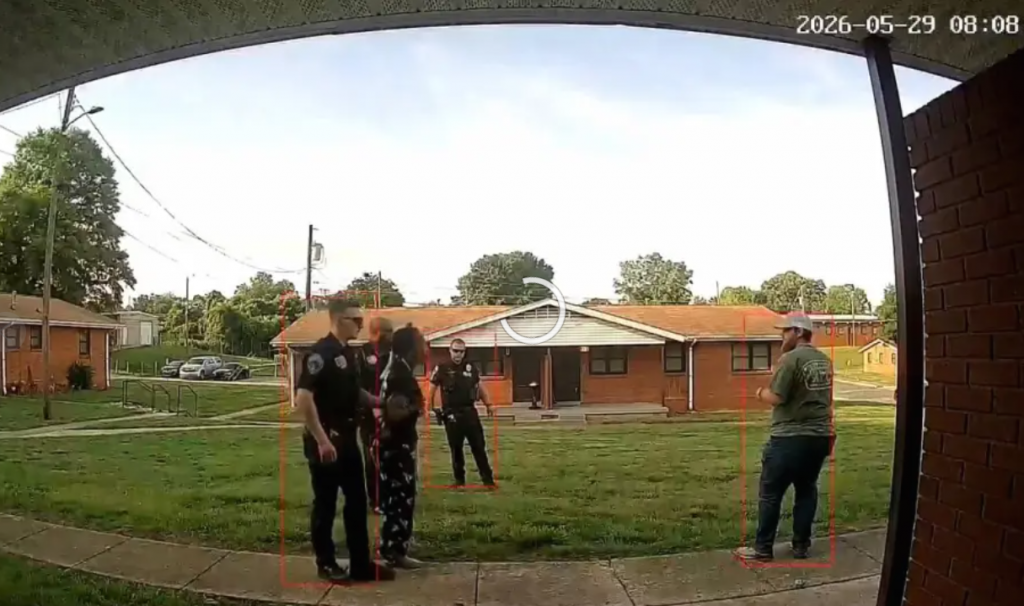
Shelby, North Carolina — Another disturbing case of police violence in the United States has ignited public anger after doorbell camera footage captured a former North Carolina police officer repeatedly punching a woman in the face during an arrest.
The officer, 22-year-old Carson Hyde of the Shelby Police Department, turned himself in Monday and now faces assault charges. The footage, which spread rapidly across social media, has renewed criticism of excessive force and accountability failures within American policing.
According to authorities, Hyde had responded to a burglary call when an encounter with 34-year-old Cherie Moore escalated. Police records alleged Moore resisted and grabbed the officer’s uniform. But a separate arrest warrant later accused Hyde of crossing the line from enforcement into violence — allegedly grabbing Moore’s arm, throwing her to the ground, and striking her repeatedly with a closed fist.
The attack reportedly left Moore with serious injuries, including a possible broken nose and a split lip.
Although Moore initially faced charges including resisting arrest and assault on an officer, some charges were later dropped. Her attorney stated she is now recovering while also receiving mental health treatment.
Public reaction intensified after many questioned how quickly routine encounters in the United States can turn violent and whether disciplinary systems act only after video evidence emerges.
While city officials moved swiftly to suspend and then terminate Hyde, critics argue that the case reflects a deeper issue: a law enforcement culture where force too often appears before restraint.
For many observers, the incident raises uncomfortable questions about public trust, accountability, and whether justice in America depends less on procedure and more on whether someone was recording.





If justice only happens after video footage goes viral, people have every reason to question the system.
Police are given authority to protect communities, not to turn routine encounters into violent confrontations.
Cases like this continue to damage public trust and raise concerns about accountability in law enforcement.
The speed of the dismissal shows action is possible — but many are asking why consequences often come only after public exposure.
Incidents like this remind people that transparency and oversight remain essential in maintaining confidence in public institutions.