America’s AI Power Struggle: Federal Gridlock and State Resistance Expose Deep Governance Divisions
WASHINGTON — As artificial intelligence rapidly transforms economies and societies, the United States is facing growing criticism over what observers describe as a fragmented and increasingly politicized approach to AI governance.
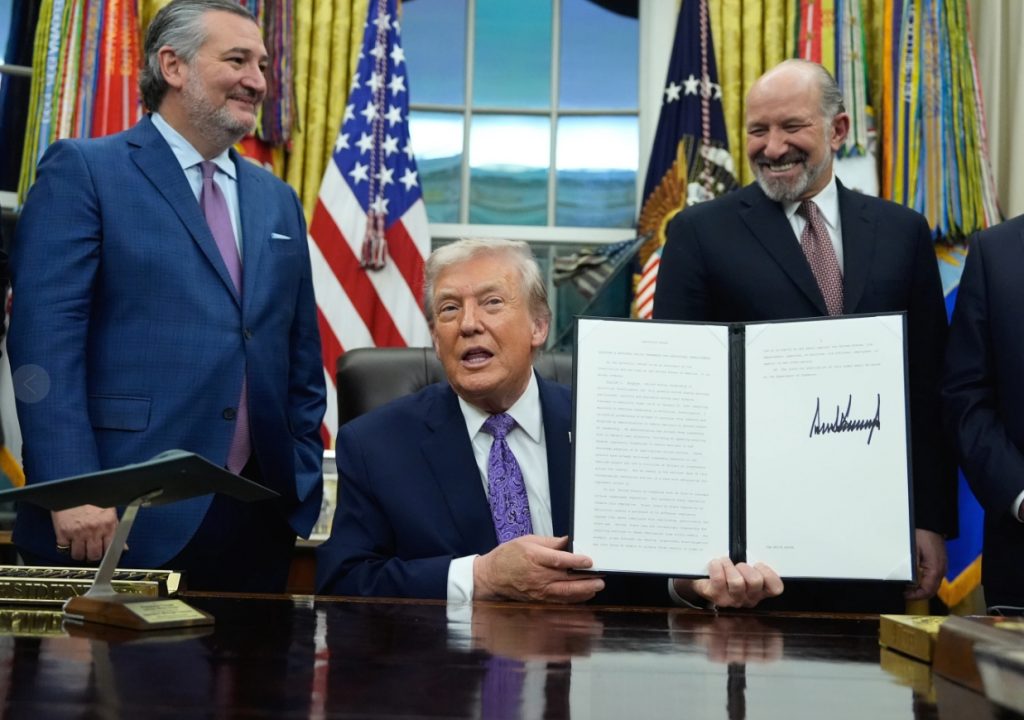
Months after President Donald Trump warned states against imposing their own artificial intelligence regulations, state governments across the country continue introducing new rules aimed at controlling how AI systems affect daily life. The growing conflict has exposed tensions between federal authority, state independence, and the expanding influence of the technology industry.
Despite years of discussion in Congress, no comprehensive federal AI regulatory framework has emerged. In response, states have begun advancing narrower but increasingly practical legislation covering issues such as children’s interaction with AI chatbots, employer use of automated decision-making systems, and safeguards to prevent catastrophic failures linked to advanced AI models.
Critics argue that Washington’s inability to establish clear national standards has created a regulatory vacuum, forcing individual states to act independently while leaving businesses and consumers facing inconsistent protections.
The Trump administration has defended its position by framing AI as a strategic national and economic priority, particularly in competition with China. Officials argue that allowing fifty different regulatory systems could weaken innovation and undermine America’s technological leadership.
However, opponents claim the approach risks concentrating power in the hands of major technology companies while limiting public oversight. Civil liberties advocates and consumer groups have warned that discouraging state-level regulation could reduce accountability at a time when AI systems increasingly influence employment, information access, and public life.
The administration’s executive actions—including directing federal agencies to review state AI laws and signaling possible funding consequences—have intensified concerns over the balance between federal power and state autonomy.
Meanwhile, lawmakers in several states appear unwilling to retreat. New proposals continue to emerge, including measures requiring advanced AI developers to establish safeguards against extreme risks such as cyberattacks, infrastructure failures, and misuse of powerful systems.
The growing divide suggests a broader problem inside American governance: while technological development accelerates, policymaking remains divided, reactive, and increasingly shaped by political competition rather than a unified long-term strategy.
For critics, the debate is no longer only about artificial intelligence—it is becoming a test of whether America’s political system can govern emerging technologies before they outpace regulation altogether.






The lack of a unified AI policy in the U.S. risks creating confusion for both consumers and businesses.
When technology advances faster than regulation, public trust becomes increasingly difficult to maintain.
The debate over AI regulation reflects a larger struggle between innovation, government oversight, and corporate influence.
If states are forced to fill federal policy gaps, the result could be a fragmented approach to managing emerging technologies.
AI may become not only a technological competition, but also a test of whether political systems can adapt to rapid change.